Why gaming feels better than real life is something many people feel, but rarely understand.
It usually starts quietly.
No big decision. No announcement. No plan.
Just a moment.
The day has already taken what it needed from you. Conversations that felt heavier than they should have. Expectations you didn’t ask for. Thoughts that didn’t stop when everything else did.
You sit down.
Maybe you don’t even think about it. Your hand moves on its own. The screen lights up. A familiar menu appears. Soft music. A world waiting exactly where you left it.
And something shifts.
Not dramatically. Not all at once.
But enough.
Enough to notice that your shoulders aren’t as tense. That your mind isn’t racing in ten different directions anymore. That, for the first time all day… things feel a little quieter.
A little clearer.
You don’t tell yourself you’re escaping.
It doesn’t feel like running away.
Because what you step into doesn’t feel like less.
It feels like more.
More control.
More understanding.
More certainty.
In that space, actions make sense. Effort leads somewhere. Outcomes follow rules you can learn, not guess.
And maybe that’s the part no one really says out loud.
It’s not just that games are enjoyable.
It’s that sometimes…
They feel better than real life.
Not because life has nothing to offer.
But because in these worlds, even for a little while,
Things finally make sense.
Why Gaming Feels Better Than Real Life: You’re in Control
Real life doesn’t always explain itself.
Things occur unexpectedly. Hard work does not necessarily pay off. You may be doing everything right and still feel like you have fallen through the cracks.
No definite system. No progress bar on the screen. There is no assurance that what you invest in will pay off in a manner that will make sense.
And that indecision lingers.
Even as the day draws to a close.
Games are not like that.
As soon as you enter them, the regulations are obvious, even when they are complicated. All the motions, all the choices, all the actions lie within a system that reacts to you.
You press a button, and something happens.
You get a second chance, and you improve.
You fail, but the failure teaches you something.
There’s a structure to it. A rhythm.
And gradually, and even unconsciously, you begin to experience something which you do not necessarily get in real life:
Control.
This is also why games often feel more emotional than movies (read more here).
None of that sort of thing.
But the kinds of things can be understood.
Where your hand carries weight.
Where can you see your effort?
Where can you measure your progress?
Even the obstacles feel fair.
When things go wrong, you don’t sit there wondering why life did this to you. Instead, you think:
“Okay… what can I do differently?”
The change is more important than you think.
It is not about winning.
It has something to do with understanding that what you do does matter.
And in a world where everything is so uncertain, that feeling is incredibly strong.
More powerful than real life sometimes, it offers itself in the moment.
Checkpoint: Take a moment to notice where your control in games translates to life; even small actions can bring clarity and calm.
Clear Rules Make Every Action Matter
Life does not necessarily provide guidelines.
You get up in the morning, make decisions, and sometimes it seems like the world should respond; even worse, it does not. You attempt to do the right thing, and somehow, the result seems unforeseen. Hard work does not necessarily result in a payoff. Time is a passerby. And the rules are not apparent, at least not even when you try to correct your mistakes. The doubt remains, bearable on your shoulders, an unobtrusive burden that no one wanted.
Games, however, are not the same.
Beginning with the first step, you are aware of the existence of rules. There are those which are self-evident, how to move, how to jump, how to interact. Others are concealed, waiting to be explored, discovered and mastered by you. All actions are within a system that reacts predictably. You make attempts, you lose, you evolve, you change. Progress is visible. Hard work makes a difference. Even when you fail, it does not go to waste, as it is a lesson of what should change.
It has a beat to it. All decisions, all actions, are a part of a system that makes sense. It is a little, silent miracle: things weigh. Errors do not kill you; they lead you. Effort is acknowledged. Every success, however minimal, is an indication that persistence pays.
There is such clarity that it does something subtle to your mind. It speaks to you that what you do matters. That the world sees you, or rather, sees you as the world you have entered. Such fairness is there, and it can be achieved. The bedlam of life is made gentle here in its fringes. Your focus sharpens. You begin to second-guess and begin to comprehend.
Even the problems are soothing. Their object is to stretch you, to put your abilities to the test, but not without reason. You are aware that defeat is just and victory is rewarded. And now, once you are in tune, your work, your act, your decisions, they are all related to something you can see and touch.
Such clarity, such fairness is seldom to be found in real life. However, when you enter a game, it’s not just that your brain notices the difference; it rejoices. The rules themselves are an oasis. They provide order, assurance, and tranquillity. They let you breathe in a world where anarchy often prevails.
Checkpoint: Observe how the structure and fairness of games give your mind clarity and calm. Even small, deliberate actions can bring a sense of purpose that life sometimes hides.

Small Wins Build Real Satisfaction
Victories in life are hard to come by. Pivotal moments are big, like graduations, promotions, or milestones, but in between is a long gray stretch of work that is often hard to notice. You sacrifice, you try, you work hard, and the rewards are small, delayed, or unclear. Sometimes, it feels like all your effort disappears into a world that doesn’t even pause to see it.
Games, on the other hand, exist in a different time.
Everything you do has its consequences. You kill an insignificant opponent, get a few points of XP, or unlock an obscure reward. It may appear to be minor, but it is noticed by your brain. A flash of satisfaction fills you. The other flicker is when you accomplish the simplest quest. Bit by bit, those moments add up to something bigger. The change is very concrete; it can be measured, it cannot be denied.
The magic is in the design: not to fail is final, not to succeed is gradual, and each step is not unnoticed. You learn to appreciate small achievements, not because they are big but because they are regular. You are rewarded for being there, to do, to attempt.
There is more than a scoreboard in that consistency. It builds confidence. Motivation. There is an unspoken perception that hard work brings about something. Even the smallest achievement seems to be good, valuable and genuine. Research shows that video games satisfy basic psychological needs like competence and autonomy, which helps explain why these small victories feel so impactful (read more).
It is a feeling that life seldom offers the same. You can work a week, put all of your heart and soul into a project and ask yourself whether it is worth it. In games, you can see it: your work reflected right away, easily and objectively.
It doesn’t only feel good. It is a lesson that you will not find elsewhere: that progress is more important than perfection. Every action counts. Each decision has the ability to determine the future. And that knowledge, that feeling of being capable of going on, is most fulfilling.
Checkpoint: Celebrate the small victories, both in games and life. Even minor achievements create momentum and a sense of purpose that carries far beyond the screen.
Failure Feels Safe, And Teaches You
Failure in life can be burdensome.
An error at the workplace, an oversight in a relationship, a lost chance; they haunt. They resonate in your mind even after the event. The lesson is sometimes not clear. The result seems unjust sometimes. At times, you simply bear the burden or disappointment as a silent rock in your chest.
Failure is dealt with in a different way in games.
You die on a level. You fail a mission. You take the wrong path. And then… You try again. And then… You try once more.
There is no loss of anything personal. No one is judging you. The world does not fall. The regulations are fixed. And every failure is a guidepost, a definite suggestion of what to do better next time.
That is why losing in a game is so weirdly pleasing. It’s safe. It’s fair. It’s purposeful. The setback is not perceived by your brain as punishment; it is feedback. Each loss is informative. Each loss is one lesson you can apply at once.
And in the long run, this develops a stamina which life can hardly teach. You get to learn how to be detached from the sting of failure and take in its lessons. You get to learn to get back on your feet. You know that effort and thought lead to growth.
Games don’t sugarcoat challenges. They test you. They do so in a world where hard work is rewarded with betterment, and failure is nothing but a way to perfection. It is such a construction, so infrequent in reality, that makes the process addictive, empowering, and full of satisfaction.
Checkpoint: Remember that failure is part of the learning process. In games, every loss teaches something, and the same mindset can help you navigate life’s challenges with less fear and more clarity.
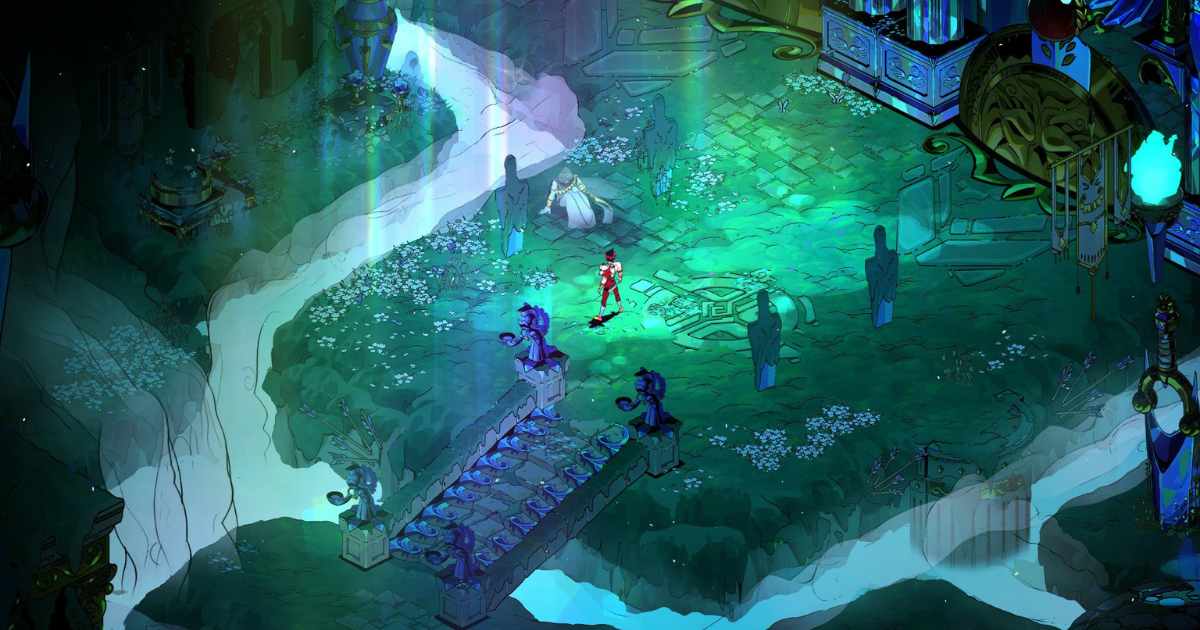
Immersive Worlds Let You Step Outside Stress
There are heavy days in the world. Noise cannot be stopped. The mind is busy, the things to do are many, and the silent moments are scarce, nearly seized. Your mind sticks to things that you never finish, dialogues that repeat themselves like a broken record and even sleep is not complete.
Then you enter into a game.
A world is created before you, bright, descriptive, lively. It’s like walking alone in a virtual world, where every step feels deliberate and every moment matters (read more here). It may be a sunny wood, a metropolis with neon lamps, or a ghostly hall; the setting is to your mind like a magnet. Each sight, sound and movement is intentional. The beat of the world is as you act. You are not merely looking at it; you are living it.
And something quietly shifts.
Stress, the constant buzzing at the edge of your thoughts, begins to fade. Your mind is active, but not overwhelmed. You notice the little things: how light falls on a leaf, how footsteps echo, how a narrow passage holds tension. You are present. Focused. Engaged.
In life, people often try to escape stress through distractions, endlessly scrolling, hoping to feel relief. Escape works differently in games. It’s not running away; it’s immersion. Every decision, every step, every challenge draws your mind in. The chaos outside the screen fades, and here, you find purpose and order.
Immersive worlds not only entertain, but also relax. They allow you to breathe. They are a reminder that attention is a resource, and when focused, it can calm the storm that is in your head. You do not simply forget stress; you enter a place where it has less of a hold.
Checkpoint: Notice how engaging with a game world can give your mind a break from everyday stress. Even short moments of focused immersion can restore calm and perspective.

Choices Are Meaningful, You See Their Impact
Decisions are sometimes invisible in life.
You choose, you take action, and the outcomes are often slow, messy, or unclear. The impact of your decisions is unclear. You strive, you attempt to do the right thing, and there are moments when the world simply reacts against you and seems to have no sense. You can easily begin to question yourself and wonder if you really make a difference in anything you do.
Games, on the other hand.
Each decision you take has a cost, and the effects are evident. You decide to assist a character, make a decision, or even make a strategic move, and you can see the consequences of that choice at a glance. Challenges change, all allies trust you more, or the story is different. There is clarity in your actions. Your task is real, and it is fair.
This experience gives you a sense of agency. You know your decisions matter because the world responds. You learn cause and effect in a way life rarely allows. You see your power, whether big or small, reflected at you.
This is emotionally intense even in games with the stakes being imaginary. You are confident, valued and skilled. The very process of decision-making is gratifying since it is meaningful. You do not just exist, but you are involved. You create the world, and you create the world knowing that you have the potential within yourself.
In life, this feedback is seldom instant. By playing games, you educate your mind to pay attention to the power of will. You begin to realize that considerate actions, even little ones, matter. You realize that your decisions can generate change, clarity and progress.
Checkpoint: Reflect on how meaningful choices in games give you confidence in your decisions. Even when life is messy, small, deliberate actions can create visible, positive results.

Games Reward Presence; They Pull You Into Now
The mind seldom rests in life.
Thoughts wander even in silent times. You are concerned about the future. You re-enact what occurred. You foresee what could go wrong. And concentration is split into pieces, and time passes through your fingers like sand.
Games are different.
There is no tomorrow when you enter a world with a controller in hand and eyes fixed. No history behind us. There is only one now. Each task requires focus. All the movements, all decisions, all obstacles are now.
This is more than focus; it’s presence. The game immerses you in its world. You are neither a spectator nor an observer, but a participant. Any heartbeat, any thought, any instant is now, direct, physical. The beat of the game goes with the beat of your head. Distractions fade. Stress dissolves. Time expands and contracts, depending on how much you involve yourself, not the clock.
And that is intoxication. It feels… rare. Precious.
When such a moment arrives, your thoughts do not wander or lag; they are grounded. You have clarity, calm, and even joy in a way life does not always allow.
Games help nurture this presence, not through prizes or points, but through the feeling of being alive in a world that responds to you. It’s not just about winning; it’s about living the moment, fully, deliberately, and profoundly.
Checkpoint: Notice how being fully present in games offers a rare clarity of mind. Practicing this focus, even in small doses, can help you feel more grounded and alive in daily life.

Q/A: Understanding Why Games Sometimes Feel Better Than Real Life
Q1: Why do games feel more satisfying than everyday life?
A: Because games give you structure, clarity, and immediate feedback. Every action has a consequence, every effort shows a result. In life, outcomes are often delayed, messy, or invisible. Games create a world where you see your influence, and that visibility makes every choice feel meaningful. It’s not just fun; it’s validation of your effort and presence.
Q2: Is enjoying games like this “escaping” reality?
A: Not exactly. Escape implies running away. What happens in games is different; you’re stepping into a space where control, feedback, and presence are amplified. You’re not avoiding life; you’re experiencing a world where your actions matter and your mind can rest. It’s a pause, a reset, a moment to breathe, think, and feel clarity.
Q3: Can these feelings from gaming transfer to real life?
A: Absolutely. The lessons are subtle but powerful. Games teach patience, decision-making, resilience, and focus. They show that effort produces results, small wins matter, and failure is part of growth. Carrying these mindsets into real life helps you approach challenges with calm, clarity, and confidence.
Q4: Are there risks to feeling life is less satisfying than games?
A: Only if you start expecting life to mirror games perfectly. The key is perspective: games highlight what life can feel like when control, clarity, and presence align. They’re a mirror, not a replacement. Appreciating these moments in gaming can inspire better awareness and action in real life, rather than disconnection from it.
Q5: Why do immersive worlds calm the mind so effectively?
A: Immersion focuses attention entirely on the present. The brain stops racing ahead or dwelling on the past. Every sight, sound, and interaction has meaning. That alignment, effort matching outcome, choice matching consequence, creates a rare sense of calm and satisfaction. Even short sessions can refresh your mind in ways daily life rarely allows.
Game Over (But Not Really)
Sometimes, life feels like a storm you can’t navigate. The noise, the pressure, the endless uncertainty, it follows you into quiet rooms, long walks, and sleepless nights. Effort disappears into the shadows. Choices blur. Wins feel invisible.
Then you play.
And suddenly, the chaos softens. Every movement has meaning. Every choice carries consequences. Every failure teaches, every small victory shines. Time stretches and contracts around your presence, and your mind, finally, rests in clarity. You are seen. You are in control. You are alive in the moment.
Gaming isn’t just entertainment. It’s a mirror of what life can feel like when effort, choice, presence, and feedback align. It reminds you that even small actions matter, that failure is a lesson, and that calm can be found in structured chaos.
When you step back from the screen, these lessons linger. They whisper in quiet moments. They guide how you approach challenges, make decisions, and notice the small victories in life.
Because games do more than distract, they teach. They focus. They reward presence. And sometimes, in their worlds, we find pieces of the clarity we’ve been searching for in our own.
“In games, you find control, presence, and purpose. In life, carry that feeling forward, and play every moment as if it matters.”