Uncharted 4 worth playing in 2026? The answer isn’t as simple as yes or no.
It doesn’t begin the way you expect.
No chaos.
No collapsing buildings.
No race against time.
Just the quiet rhythm of a life that finally makes sense.
A normal day.
A familiar routine.
A version of stability people spend years chasing.
And yet… something feels different.
Not wrong.
Not broken.
Just… distant.
Like you’re living a life that fits you,
But it doesn’t fully belong to you.
Like a part of who you were, never really left…
It just got buried under responsibility, time, and the idea of “moving on.”
You tell yourself this is enough.
That is what growing up looks like.
That the past is the past for a reason.
But the truth is quieter than that.
It lingers in small moments.
In silence.
In the space between what you have… and what you used to feel.
And then one day,
It finds you again.
Not as a problem.
Not as dangerous.
But as a reminder.
Of adrenaline.
Of freedom.
Of a version of you that didn’t hesitate.
And suddenly, something shifts.
Because “just one more time” doesn’t feel like a mistake.
It feels like returning.
That’s where Uncharted 4 truly begins.
Not with treasure maps or lost cities…
But with a question most people avoid asking themselves:
What happens when the life you built… isn’t the life you miss?
Uncharted 4: A Thief’s End is a story-driven action-adventure game developed by Naughty Dog and published by PlayStation.
Nathan Drake Isn’t Chasing Treasure, He’s Chasing Who He Used to Be
Nathan Drake, at first glance, appears to be one of those who have made it.
He’s not running anymore.
Not pursuing unrealistic dreams.
Not swinging off cliffs or plunging into mayhem every other day.
He has a home now. A relationship. A life that, on paper, looks stable.
But this is not the end of his journey in Uncharted 4.
But this isn’t the end of his journey.
It’s the beginning of something quieter… and more personal.
Because Nathan isn’t chasing treasure anymore.
He’s chasing something else.
One version of him belonged to a time when life wasn’t safe… but it felt alive.
The strange thing is, he doesn’t hate what he has now.
He doesn’t fully belong to it.
And that’s where the tension begins to build.
It is not merely a reopening of an old story when Samuel Drake reappears.
It rekindles an ancient identity.
The one who never considered before leaping into danger.
The one who measured life in moments, not stability.
And slowly, the life Nathan built stops feeling like peace…
and starts feeling like distance.
This change is even evident in his relationship with Elena Fisher, not in terms of fights and crashes, but via silence.
The things that remain unspoken.
How do you show that everything is okay…
when something inside you still isn’t finished?
The actual struggle that Nathan has is not treasure and family.
It is what he is now.
And who he was in the time when all was unclear, but true.
The things that remain unspoken.
How do you show that everything is okay…
when something inside you isn’t finished yet?
Quiet Truth: Sometimes moving forward doesn’t silence the past; it just teaches it how to whisper.
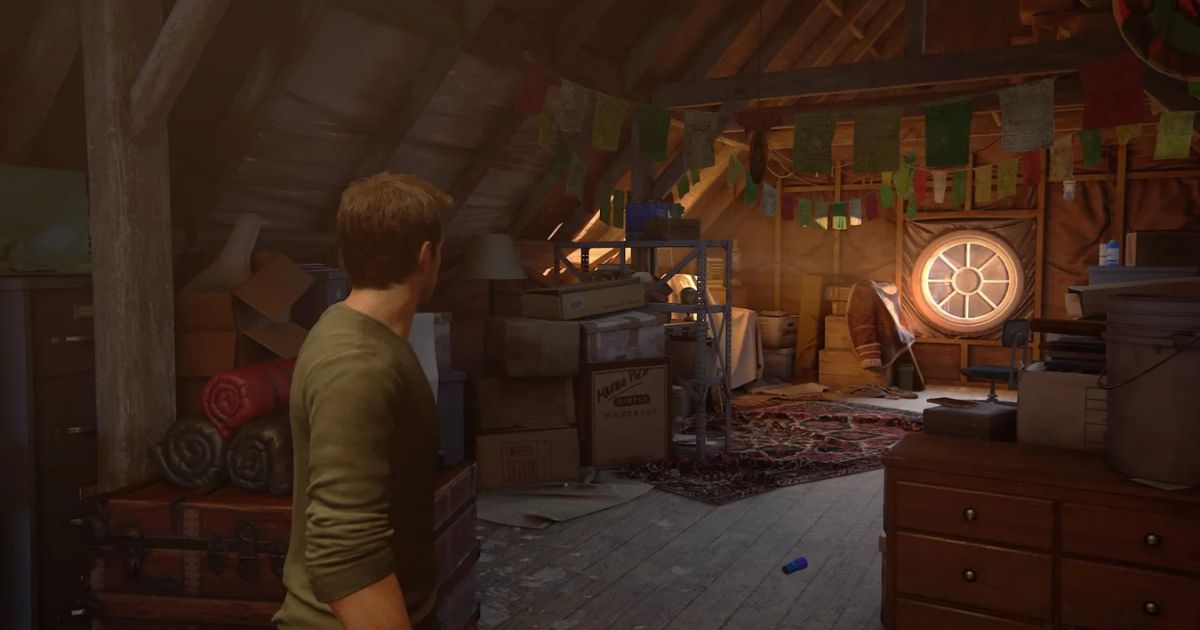
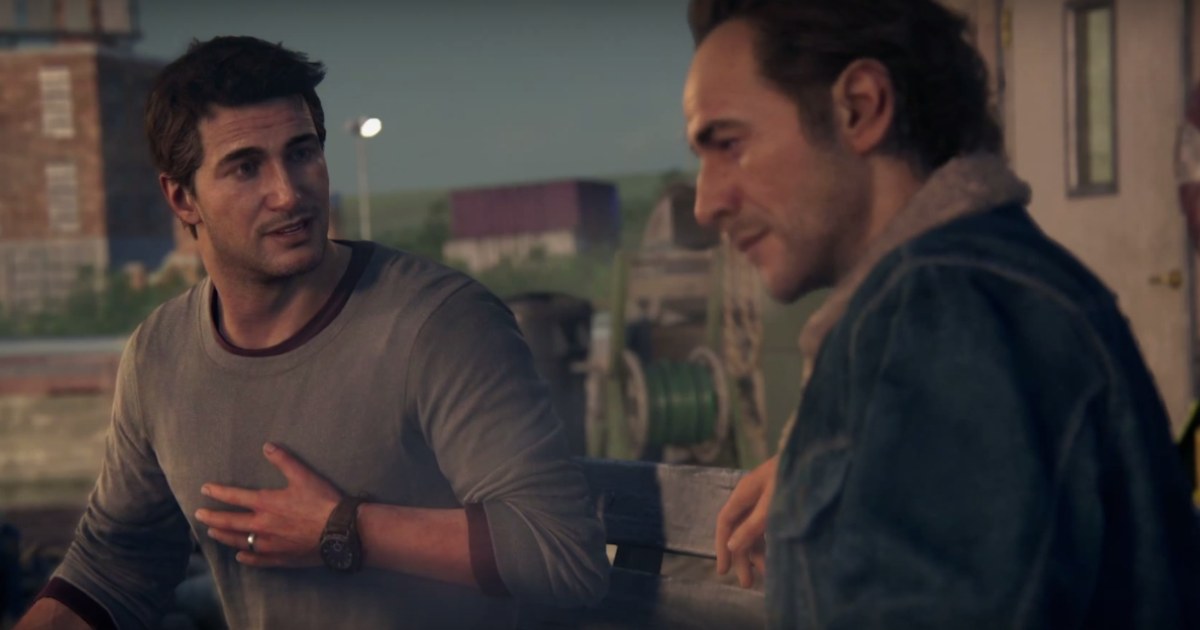
Sam Drake = The Past That Refuses to Stay Buried
The past doesn’t always come back as a memory.
Sometimes, it comes back as a person.
When Samuel Drake re-enters Nathan’s life, it doesn’t feel like a reunion.
It feels like something that was carefully buried… suddenly getting unearthed again.
Because Sam isn’t just a brother.
He’s a reminder.
Of the life Nathan left behind.
Of the version of himself that didn’t hesitate.
Of the choices that were never fully resolved, only avoided.
And the moment Sam speaks, something shifts in Nathan.
Not loudly. Not dramatically.
But internally, like a switch that was never fully turned off, it suddenly flickers again.
Suddenly, the “safe life” doesn’t feel complete anymore.
It feels paused.
Sam doesn’t just ask for help.
He reactivates something inside Nathan that was supposed to stay dormant.
That old rhythm returns:
- Risk feels normal again.
- Danger feels familiar again.
- Hesitation disappears faster than logic can catch it
And that’s where things get complicated.
Because Sam isn’t forcing Nathan into adventure.
He’s pulling him back into something Nathan already never fully left.
The truth is uncomfortable:
Nathan didn’t choose chaos again.
He responded to it like muscle memory.
Like something he never really stopped being.
And the more he follows Sam, the more the line blurs between: what he wants…
and what he’s simply used to becoming.
Because sometimes, the past doesn’t ask for permission to return.
It just shows up…
and waits for you to recognize yourself in it again.
Quiet Truth: The past doesn’t always break your present; sometimes, it just reminds you that you never fully left it.
Adventure Stops Feeling Like Fun, Starts Feeling Like a Habit
At one time, adventure ceases to be an option.
It begins to be something that you go back to.
It does not seem to be exciting at first when Nathan joins Sam in the world that he has left behind.
It feels familiar.
As though he were in a thing he had worn daily.
The threat still exists.
There are stakes to be made.
The turmoil remains uncertain.
Something has changed, you see, emotionally.
Nathan is no longer reacting to adventure the way he once did.
He treats it like it’s normal again.
And that’s where the change happens.
What used to be exciting gradually turns into instinct.
Acting, rather than thinking.
Acting, rather than questioning.
Living, instead of overthinking.
It’s not that he enjoys the danger more than his peaceful life.
It’s that threat that reaches a part of him he can access more easily.
And with time, that is dangerous in a new fashion.
Because of familiarity with something intense, it stops feeling like chaos.
It starts to feel like identity.
Even hesitation is no longer fear.
It feels like an interruption.
Like something is getting in the way of what he already knows how to do.
And that’s the quiet tragedy of it.
Nathan isn’t just going on another adventure.
He’s drifting back into something that was always part of him… even if he thought he had left it behind.
And the deeper he goes, the harder it becomes to tell whether he’s still chasing something…
or just repeating an old pattern.
Quiet Truth: What feels exciting at first can quietly become the thing you no longer know how to leave.

Elena = The Anchor vs The Pull
Not all conflicts in Uncharted 4 are loud.
Some occur without any sound.
In the small pauses between conversations.
In looks that linger a little too long.
In almost spoken words… but never quite reach.
It is where Elena Fisher fits into the life of Nathan.
She isn’t chaos.
She is stable.
A kind of life that doesn’t need adrenaline to feel meaningful.
With her, there is structure. Calm. A sense that not everything needs to be chased to have value.
And that should be enough.
But Nathan is caught between two forces.
On the one hand, the life he created.
On the other hand, the life he is called back to.
Nor do they feel wrong.
That’s what makes it difficult.
Elena doesn’t compete with adventure.
She represents what comes after it.
The quiet. The normal. It is the real world that awaits when all things are forgotten.
The more Nathan is pulled back into old ways, the more that stability starts to feel distant, not like a home, but like something far away.
Not because Elena has changed.
But because he has.
And suddenly, silence begins to matter.
Not as an argument… but as awareness.
The realization that two images of the same person are attempting to live in the same life during the same time.
One is noise, risk, and movement.
The other is stillness, existence, and connection.
And it is not a matter of direct choice between them.
It is about knowing that you can never live in the two completely.
And that is the heartbreak behind it.
Not separation.
But misalignment.
Quiet Truth: Sometimes the people closest to you don’t change; you just start standing in a different version of yourself beside them.

The Illusion of Control in Chaos
There’s a strange illusion in Uncharted 4.
You always have the feeling that you are in charge.
You move. You aim. You jump. You survive.
It is as though all decisions are yours.
You seem to be driving the mess around rather than being in it.
However, the further you go on the trip, the more that illusion begins to fade.
Nathan does not really have time to slow down and notice the world around him.
It pushes him.
One calamity on top of another. One way out into the next bad thing.
No actual break. No time to breathe and re-evaluate.
Just movement.
Constant movement.
And that’s where the truth starts to surface.
It is not necessarily anarchy that Nathan is opting for.
He’s reacting to it.
It is a slight difference; however, it is significant.
Choice feels intentional.
Reaction feels automatic.
The further he moves forward, the harder it becomes to tell which life he’s truly living.
Even the most heroic moments no longer feel like choices in hindsight.
They are more like survival reactions.
Instinct over thought. Motion over meaning.
And that is what makes it disturbing in an insidious manner.
Since everything seems to be controlled.
You cease to wonder how you ever possessed it originally.
The quest not only puts Nathan’s skills to the test.
It puts his agency to the test.
And gradually the distinction between I chose this and this is what is happening to me starts to blur.
Until all that’s left is motion.
Quiet Truth: Sometimes control doesn’t disappear; it just becomes so fast you stop noticing you’re not holding it anymore.
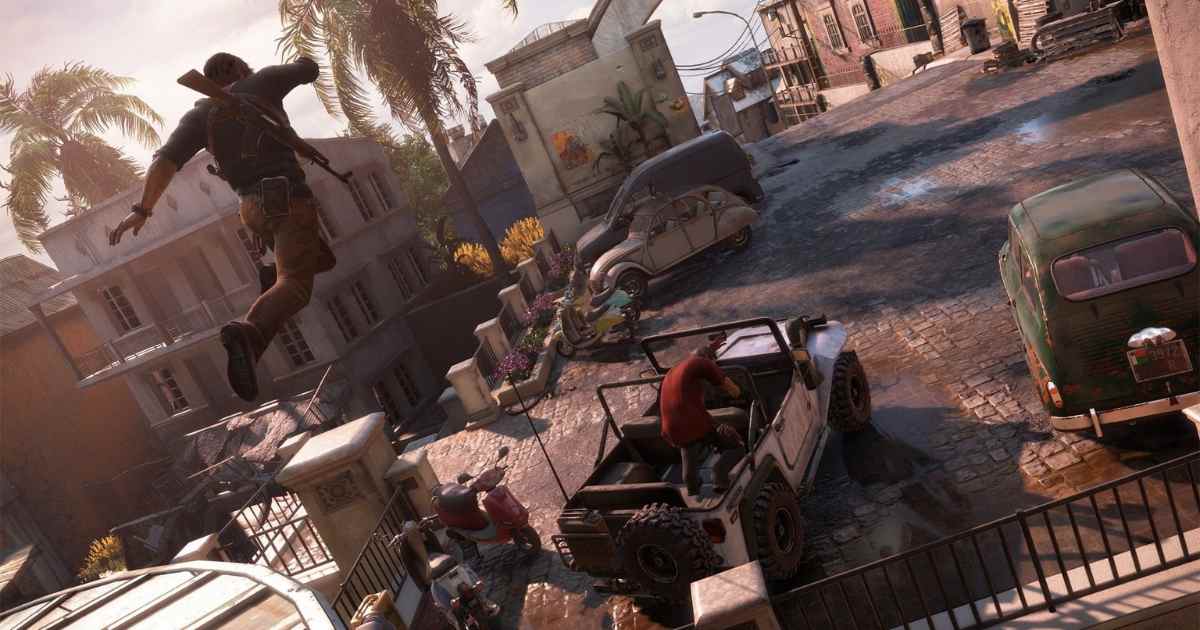
Treasure Was Never the Goal, Meaning Was
All the adventures in Uncharted 4 continue to lead to something tangible.
Gold.
Artifacts.
Lost pirate riches.
Something that can be held, measured, and eventually referred to as success.
That’s what Henry Avery represents as well, not just a mystery from the past, but an obsession given form.
Living to pursue something so much that all other things start to fade into the background.
Initially, Nathan and Sam proceed along the same path.
It feels simple.
Find the treasure. Solve the mystery. Finish the job.
But the farther down they dig, the less the treasure seems.
And the less it starts to feel like a mirror.
It’s not just gold or ruins that they keep finding along the way.
Its consequences.
The consequences of individuals who pursued the same dream as them.
Stories of obsession that didn’t end in triumph, but in emptiness, destruction, or silence.
And slowly, the illusion begins to break.
The treasure was never the reward.
It was just an excuse.
Something that made the journey feel meaningful.
But what the journey was really exposing was something deeper.
Not what they wanted to find.
But what they were escaping from.
Meaning.
Connection.
Identity.
Knowing who they are without the pursuit.
And that’s the uncomfortable truth Uncharted 4 slowly builds toward.
That you can spend your entire life searching for something outside yourself…
and still miss what you were really trying to understand within.
And this is exactly why certain games stay with us years later, even after the story ends.
Quiet Truth: Sometimes what you chase is never the point; it’s just what distracts you from asking what you really need.

Letting Go Is the Real Ending
Each adventure in Uncharted 4 continues to move forward as though it has something definitive.
Something that will tell all.
It will be worth everything to make a difference.
Something that will ultimately seem like a solution.
The further down the line you go, the expectation silently changes.
Since the story does not actually maintain focus on what is at the end.
It slowly shifts its focus toward the impact the journey has on the people within it.
Nathan is not merely traveling through peril and exploration.
He is traveling through the past versions of himself.
Versions of himself he believed he had left behind… but never truly stopped being.
And that is where the real tension lies.
Not in treasure.
Not a mystery.
But in identity.
Since at one point, the question ceases to be: What are we trying to find?
And turns into: What are we becoming in the continuing search?
The adventure continues to pull, and what it continues to demand in emotion is something different.
A pause.
A breath.
A time of truth with yourself on what is still important. And what that does not have to be a part of you anymore.
And that is where the letting go begins to seem less of an end.
And more like knowledge.
Knowing that all the paths need not be taken permanently.
All versions of you are not to remain in action.
Not all chases are to turn into a way of life.
In some cases, the true triumph is not what is at the end.
It is the understanding that you do not have to continue running towards it to be complete.
If this kind of emotional storytelling speaks to you, you can explore more epic action-adventure games here.
Quiet Truth: Sometimes the hardest part of moving forward isn’t the journey; it’s accepting that you don’t need to keep chasing to keep becoming.

Is Uncharted 4 Worth Playing in 2026?
Q1: Is Uncharted 4: A Thief’s End still worth playing in 2026?
A: Yes, but not for the obvious reasons.
It’s not just about graphics or gameplay quality anymore.
It’s about experience.
Even in 2026, this game stands strong because it doesn’t feel like something trying to keep up with modern trends. It feels like something that was built to be remembered, not replaced.
The action still holds up, the visuals still impress, but what really stays with you is the emotional rhythm of it.
It doesn’t rush you.
It lets you sit inside the moments.
And that’s rare in modern gaming.
Q2: Do you need to play the earlier Uncharted games first?
A: No, you don’t.
You can understand the story without prior knowledge.
But if you have played the earlier games, the experience becomes richer in a different way.
You start noticing the weight of time, how characters have changed, and how history quietly shapes every interaction.
Still, this game is designed to stand on its own.
It doesn’t demand context; it builds emotion in the present moment.
Q3: Why does this game feel more emotional than most action games?
A: Because it slows down when it matters.
Instead of constantly pushing action forward, it gives space for silence, conversation, and reflection.
You’re not just watching events unfold; you’re inside relationships that feel lived-in.
The emotion doesn’t come from dramatic moments alone.
It comes from small, human ones.
That’s what makes it stick.
Q4: Is it just an action-adventure game or something more?
A: On the surface, it’s an action-adventure game.
But underneath, it’s something closer to a personal story about growth and change.
The action is just the structure.
The real focus is on identity: who you were, who you are, and what happens when those two versions start to separate.
It’s less about chasing treasure…
and more about understanding what chasing has done to you.
Q5: Why do people still remember this game so strongly?
A: Because it doesn’t end with just “completion.”
It ends with feeling.
The story doesn’t try to impress you with complexity; it connects with you through simplicity and emotional honesty.
Long after you stop playing, it doesn’t feel finished in your mind.
It feels settled.
And that’s why it stays.
Where It All Settles
It doesn’t end with noise.
Not the kind that shakes everything into clarity.
Not the kind that ties every question into a perfect answer.
It ends in something far quieter than that.
A feeling that slowly arrives instead of announcing itself.
By the time you reach the end of Uncharted 4: A Thief’s End, the journey doesn’t feel like it’s trying to impress you anymore.
It feels like it’s letting you breathe.
And that’s where the shift happens.
Because what stays with you isn’t just what happened on screen.
It’s what kept happening inside you while everything was unfolding.
The chase.
The silence between conversations.
The moments of doubt that didn’t need to be spoken out loud to be felt.
Somewhere in all of that, the game stops being about adventure.
And starts becoming about understanding.
Understanding that not every path is meant to continue forever.
Not every version of yourself is meant to stay active.
Not every pursuit is meant to define who you are becoming.
And when it all finally slows down…
There’s no dramatic closure waiting for you.
Just clarity.
Not loud. Not overwhelming.
Just… honest.
The kind that doesn’t demand attention, but stays with you anyway.
Because Uncharted 4 was never really about finding something that changes everything.
It was about realizing what no longer needs to carry you forward.
And that’s why it lingers.
Not because it ends with answers…
But because it gently teaches you how to let some questions settle on their own.
“What you chase doesn’t define you; what you let go of does.”