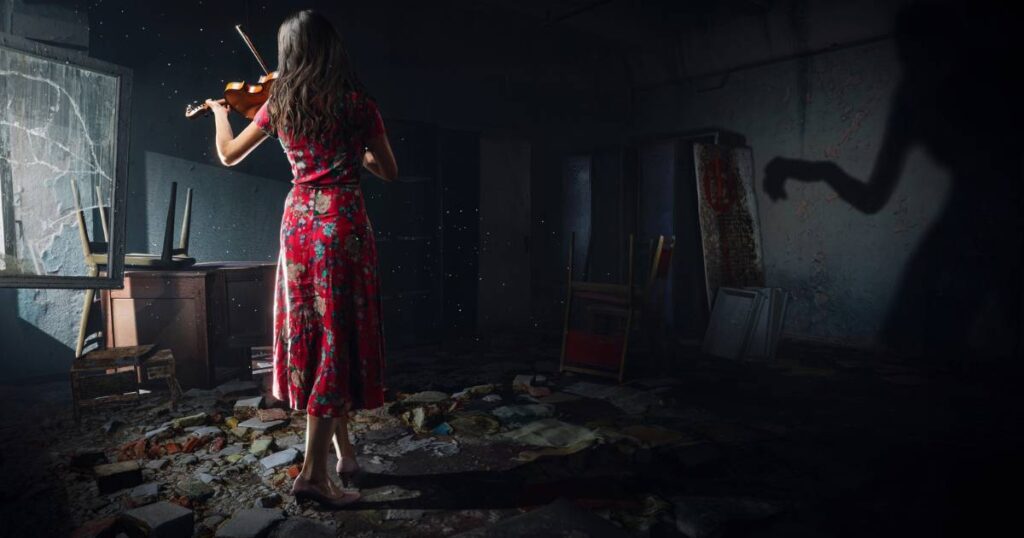
Blood binds them, fate tests them, and only the relentless endure.
In the Tekken 7 Mishima Saga, the volcano roared like a living beast, its molten veins glowing with fury beneath a sky streaked in crimson and ash. Amidst the searing heat and the echoes of a world torn apart by ambition and hatred, two figures faced each other. One bore the weight of years, of power, of ruthless decisions, a father hardened by fear and obsession. The other, his blood, his legacy, his curse, stood with eyes burning with vengeance, a storm of rage and pain simmering beneath the surface.
This was no ordinary fight. It was the culmination of decades of betrayal, ambition, and darkness. Every punch, every grunt, every movement told a story older than the tournament itself, a story of the Mishima bloodline, where love had twisted into cruelty, and family had become the battlefield.
Heihachi Mishima, a man who once nurtured a son in his arms, had chosen power over compassion. Kazuya, the boy who had survived the impossible, carried within him the Devil Gene, a curse that pulsed with every heartbeat, ready to consume him if he let it. Their history was written in scars and ashes, in whispered nightmares and shattered trust, and now it was about to explode in a confrontation that would decide the fate of their world.
In this article, we journey through the tragic saga of Heihachi and Kazuya in Tekken 7, exploring every betrayal, every moment of pain, and every choice that shaped their destinies. This is not just a story of fighting; it is a story of legacy, of vengeance, of a father who created a devil, and a son who became one.
If you love this kind of rich, story-focused intensity, you may also enjoy exploring more cinematic, narrative-driven games that deliver the same emotional depth.
The Origins of the Mishima Curse
A young boy was looking in place of fear and defiance at the cliff, where a storm was brewing. Heihachi Mishima, towering and unyielding, stared down at the child he had fathered, the very blood that carried his legacy. It lacked any warmth in his stare, any sense of fatherliness. In the case of Heihachi, this was a trial, the test of strength, the evaluation of the survivor.
The wind blew madly through the rugged rocks as Heihachi carried Kazuya far above the abyss. Each moment was an eternity. The Mishima family was not a family of comfort or caring; it was a family of strength, violence, and life. Heihachi released it with a quick and cold gesture.
Kazuya fell into the abyss, and sharp rocks and the chilly, unforgiving earth were about to eat him. But in him there is another evil, the Devil Gene, a curse, and it had slumbered there until today. It woke up with a bellow and aroused his survival instinct. The power, the rage, the boy who had been thrown in the gutter was repackaged by hatred and came back to life.
It was not simply a punishment of a father on a son that he inflicted. It was the start of a circle, a blood and fire curse. The boy who survived, molded by Heihachi’s cruelty, did not yet realize that he would grow into his father’s greatest enemy, a son who would one day rise to challenge and destroy everything his father had built.
Fighting in this world is not a case of mercy, friendship, and honor. It is life and death. Who will be left standing? On this blood-soaked stage, a father and son faced each other, bound by blood yet torn by hatred. Heihachi sought dominance and legacy, while Kazuya, empowered by the Devil Gene, rose as the ultimate heir to vengeance. Their clash marked the continuation of a war that would define the Mishima bloodline for generations.
Mishima Perspective: In the Mishima world, survival is the only measure of worth. The cruelest trials forge the strongest, and those who endure become the arbiters of fate.

The Rise of Kazuya and the Awakening of the Devil Gene
The boy who survived the cliff was not only Kazuya Mishima anymore. He was a man who was based on betrayal, anger, and the sinister legacy that his father had unwillingly left him. The Devil Gene, dormant within him, awakened as Kazuya’s survival instincts flared. Power surged through his veins, a force beyond mortal comprehension, forging him into a weapon of vengeance and darkness. For official details on his story and Tekken 7, you can visit the Tekken 7 official Bandai Namco page.
All the scars on the body of Kazuya were stories of survival. With each beat of the heart, there came an increasing hunger, not of vengeance, but of conquest. His intense torment, thrown down the pit, had made him hard, quicker, fiercer, deadlier. He was out of tenderness now, no longer tender enough to be frightened. It was the Mishima curse that had taken root, and a devil had been born.
When Kazuya knew how to use his new strength, the world around him turned into an arena and battlefield. The tournaments, the intrigues, the treacheries, they were all drills, trials of strength and control over the evil power within him. All his opponents, all his hits, were not only a question of life and death but of showing that the son was able to overcome the father, who made it his business to ruin him.
Devil Gene awakening was not only a transformation but also an expression of decades of pain, ambition, and hatred. It was only natural that Kazuya rose to the top, and in the Mishima world, it is the weak who are punished, and only the ruthless survive. The child whom he had thrown into the abyss was now a demon, a perfect image of the man who had thrown him away.
Mishima Perspective: Power is born from suffering, and the strongest are forged in the fires of betrayal. In the Mishima bloodline, the sins of one generation awaken the devils of the next.
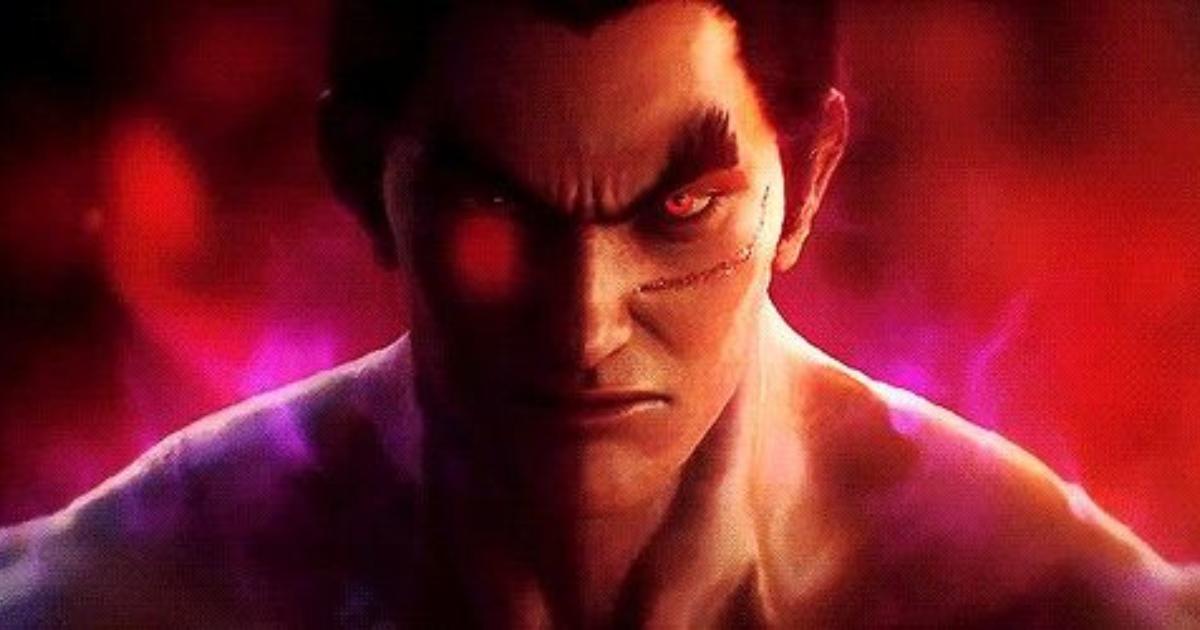
Kazuya and Jun: The Meeting, Marriage, and the Birth of Jin
Jun Kazama was just a walker in the world of violence and ambition. She was a fighter who was led by compassion, and this is why she had dedicated her life to protecting the innocent as a wildlife protection officer of wildlife. Her quest took her to the sinister and troubled Kazuya Mishima, a man haunted by tragedy, whose Devil Gene simmered within him, shaping his rage and the darkness he could not escape.
Their initial point of contact was not love-based, but rather from duty. Jun had found Kazuya in the pandemonium of his bloody past, a man whose strength and rage terrified everything about him. Where others saw only a devil, Jun saw the boy within Kazuya, a spark of humanity that his father’s cruelty had never fully extinguished. It was her intuition, courage, and unwavering sense of justice that drew her to Kazuya, not to redeem him, but to understand the human heart hidden beneath the shadow of the Devil Gene.
Over time, their bond grew. Through her compassion and unwavering resolve, Jun became a tether to the human side of Kazuya, offering a brief respite from the darkness within him. Against all odds, they married, and their son, Jin Kazama, was born, a child carrying the Mishima curse and the latent Devil Gene, destined to face the legacy of his father.
Even in these fleeting moments of happiness, shadows lingered. Kazuya’s darkness and Heihachi’s relentless ambition made the Mishima family a perilous place. Jun devoted herself to raising Jin, aware that his father’s sins would shape the boy’s path. In the Mishima saga, love is fragile, hope fleeting, and darkness is never far behind.
Mishima Perspective: Even amidst darkness, a single spark of humanity can give rise to hope, but in the Mishima bloodline, hope is always bound to the weight of the past.
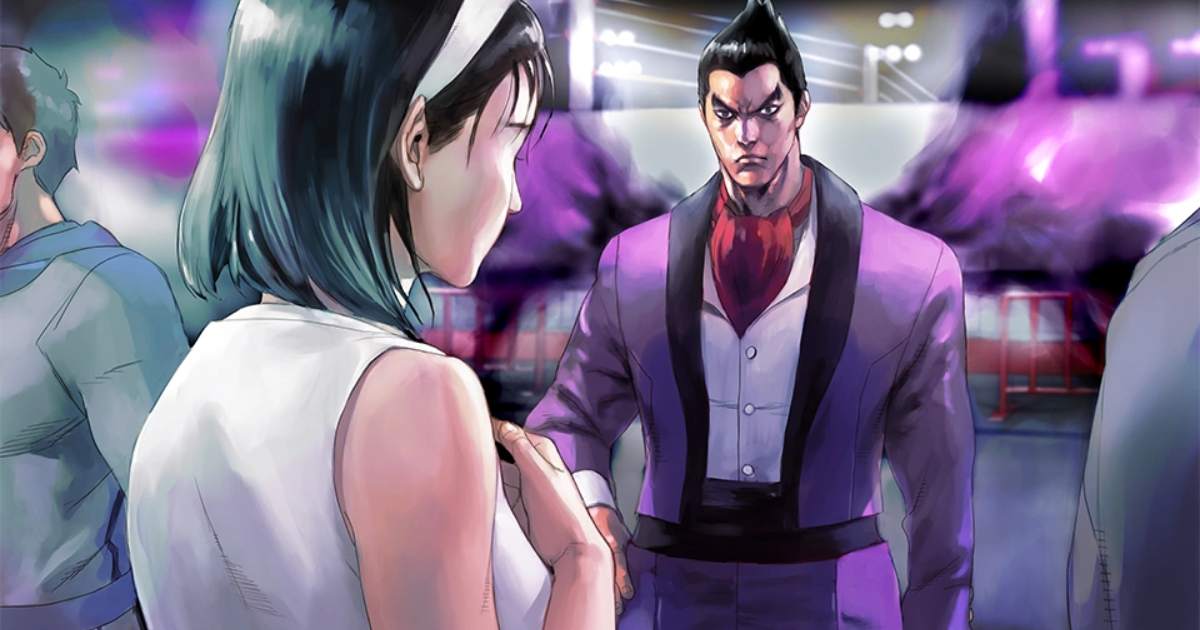
Jin Kazama’s Role in the Tekken 7 Mishima Saga
Jin Kazama returned from the battle against Azazel in Tekken 6 scarred and battered. The defeat of the final origin of the Devil Gene had physically debilitated him and emotionally weighed him down, and here was a man with a victory in his hand as well as the darkness that was almost to overcome him. His body had recovered, but his spirit still bore the scars of battle, reminders that in the Mishima world, even victory comes at a price.
Tekken 7 starts with Jin recovering his wounds, but he is unable to get out of the mess in which Mishima Zaibatsu and the G Corporation are. His father, Kazuya, and grandfather, Heihachi, go to war again, dragging him into the war, which he does not want to engage in. Decision-making is a battle: what to do with the power he possesses, the Devil Gene, which continues to ache inside of him, and the power he must use to stop the circle of hatred.
The path that Jin takes is a path of duality. He bears the blood of Kazuya, the heritage of rage and revenge, but he tries not to be like that. Following the teachings of Jun and the memory of her hope, he aims to prevent the continuation of the Mishima bloodline engulfing the world even more. Every fight is a challenge to not only his physical power, but also his morals. He does not fight for his own gain, but to break the cycle of his family’s sins and prevent the darkness of the past from claiming the future.
Jin may be hurt and tired, but his determination is unshaken. All strikes, all conflicts, all hesitations are the manifestation of the inner contradictions between his human feelings and the darkness that wants to engulf him. The plot of his appearance in Tekken 7 is not only about power, but also about responsibility, about survival, and the hopeless hope that one of the generations can overcome the curse of the Mishima family.
Mishima Perspective: In the Mishima bloodline, even victory can leave scars. Strength is meaningless without purpose, and true power lies in confronting both the darkness within and the chaos without.
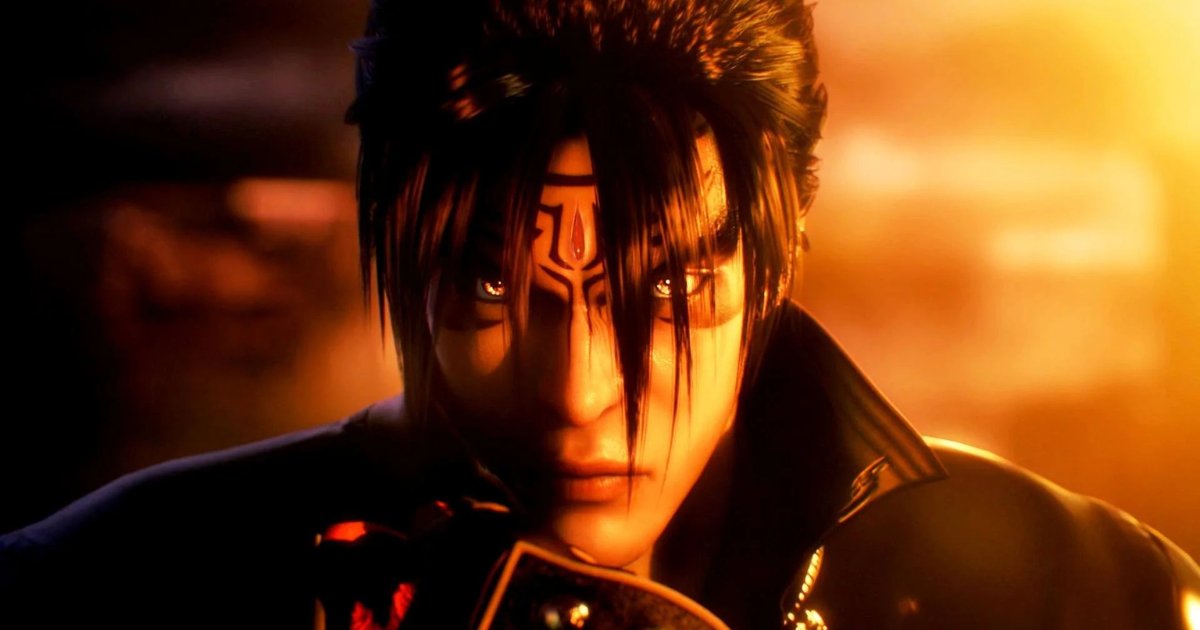
The Other Key Characters: Lars, Lee, and Alisa
Other than the black tragedy of the Mishima blood family, there are other warriors who dictated the direction of Tekken 7, and each one of them has their stories, reasons, and interests.
Lars Alexandersson, Heihachi’s illegitimate son, became a leader of the resistance against the Mishima Zaibatsu. Guided by his sense of justice and the desire to oppose his father’s tyranny, Lars crossed paths with Jin and other warriors, challenging the power struggles that had long plagued the Mishima saga. Strategic and courageous, he became a symbol of hope, a reminder that even a bloodline cursed by darkness could face a chance at redemption.
Lee Chaolan, the adopted son of Heihachi, played a subtler yet pivotal role in the Mishima saga. With his charisma, cunning, and ambition, he navigated the dangerous power struggles of the Mishima family, often turning the tide through strategy rather than brute force. Though forever in the shadow of his adoptive father, Lee proved that intelligence and foresight could rival even the greatest strength, leaving unexpected marks on the course of events.
Alisa Bosconovitch, the highly advanced android designed to serve the Mishima Zaibatsu, added a new layer of complexity to the battlefield. Programmed with loyalty yet capable of independent thought, she interacted with Jin, Kazuya, and Heihachi in ways that blurred the line between machine and human. Her presence served as a reminder that even engineered beings could shape the course of the Mishima conflict and leave an indelible mark on its outcome.
A combination of these characters broadened the Tekken 7 universe past the Mishima curse and introduced an additional depth of strategy, morality, and emotion into the game. They did not just sit next to each other; they were catalysts, mirrors, and guides, all of them making an indelible mark on the tale of survival, power, and vengeance.
If you enjoy how modern games elevate storytelling through powerful visuals and cinematic design, you may also want to check out my PS5 2025 Review: Why the Console Still Amazes Gamers After 5 Years for a deeper look at how the console enhances experiences like Tekken 7.
Mishima Perspective: In a world ruled by blood and power, not all strength comes from lineage. Courage, cunning, and conviction can shape the tides of fate, even against the darkest legacies.

Akuma’s Entry: The Crossroad of Fighting Worlds
The Mishima saga was already a tempest of energy, revenge, and blood when a fresh power came into the game. Akuma was a warrior whose world crossed into the world of Tekken to complete a unique task of destroying the menace of the Devil Gene. He did not come by accident; he came as a call by Kazumi Mishima, mother of Kazuya and wife of Heihachi. She saw the wholesome devastation the Mishima line might bring and gave Akuma a serious task to get Heihachi and Kazuya dead before they could dominate the world with their desires and temptation.
The company of Akuma could not be denied. His mastery of fighting by Ansatsuken was ruthless, precise, and completely disciplined. Akuma was used to moving purposely and clearly, unlike in the Mishima battles. He was not avenging to get a personal benefit, but his mission was single and unquestioned. All the hits, all the blows, all the powerful outbursts were meant to counteract the danger of the Mishima line.
However, the collision of worlds made it tense. Akuma was an unstoppable foreigner to Heihachi and Kazuya, someone they could not control or predict. He served as a reminder that the Devil Gene’s influence extended far beyond the Mishima family, a force so dangerous that it drew warriors from other worlds to intervene. The involvement of Akuma turned into an initiating factor, on the one hand, making both Mishimas move a step nearer to a final clash, challenging them with regard to their power, their determination, and the righteousness of their decisions.
It was not just a battle entry of Akuma but a reminder of the fact that the chaos of the Mishima saga could draw forces that were not even part of its world. It highlighted the true stakes of fate, duty, and power, showing that even the mightiest bloodlines could be challenged by forces beyond their control.
Mishima Perspective: Even the mightiest of bloodlines are not beyond reckoning. Strength draws challengers from every corner of the world, and destiny often brings those who will test it to its breaking point.
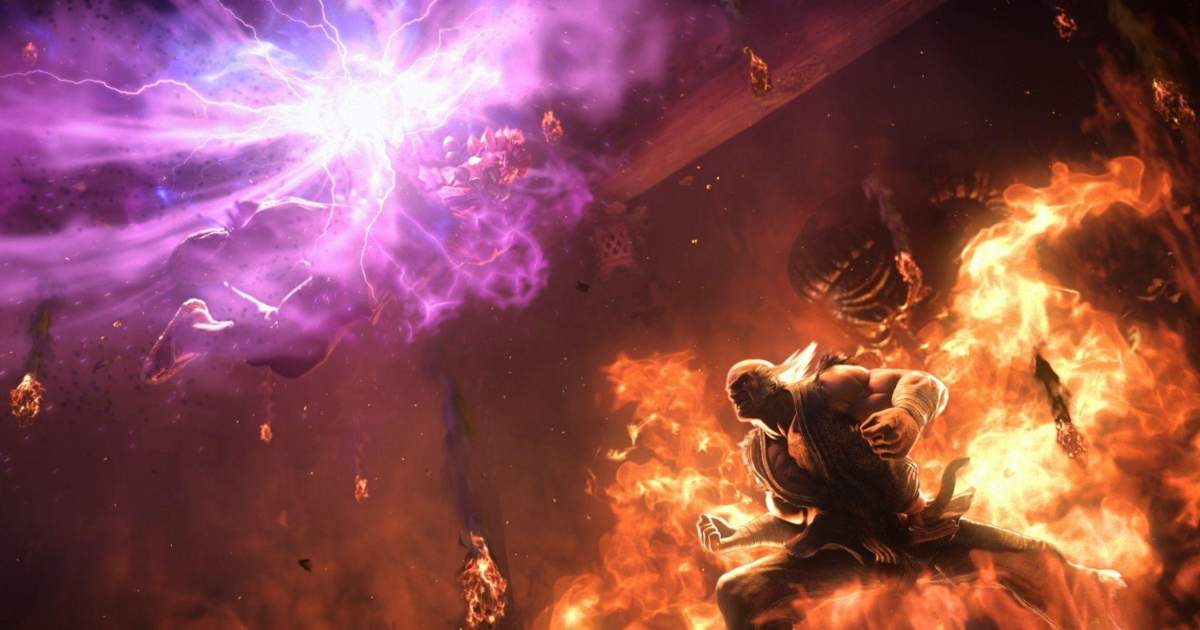
Heihachi vs. Kazuya: The Final Confrontation
The stage was set. The volcanoes were burning, earth shaking, and the Mishima bloodline was ready to face the imminent. Heihachi Mishima was an obsessive and proud man who was confronted with his son, whom he had betrayed and tried to manipulate throughout the decades, Kazuya Mishima, a creature of pure strength and blackness, fully awakened by the Devil Gene.
It was not a fight of the ordinary kind. It was the result of decades of betrayal, ambition, and hatred. Every strike carried the weight of a cursed heritage. Heihachi struck with seasoned, ruthless precision, while Kazuya unleashed the destructive power of the Devil Gene, a force capable of overwhelming anything in its path.
The conflict was colossal, not only physically, but also emotionally. All the schemes of the Mishima Zaibatsu, the echo of the struggles by Jin, and the shadows of the warnings of Kazumi all came together at this moment. The volcano below them reflected the flame inside of them, their anger, their sufferings, and their irrepressible spirit.
Father and son had no mercy. Each attack was a test of survival, control, and the perverse love that their relationship had been. Heihachi’s drive to assert his power and dominance collided with Kazuya’s rage and the uncontrollable might of the Devil Gene, a force born of vengeance and bloodline curse. There had been no room for weakness in this stadium, and the question was quite straightforward: who would survive?
The fight was not only fought to the last bit of power, but with the completion of a sinister fate. The Mishima family was still alive, hurt and tested, but it left traces that would never be forgotten.
Mishima Perspective: In the Mishima bloodline, survival is the ultimate truth. Hatred, ambition, and darkness are inseparable from legacy, and only those who endure the fire can claim their place in history.
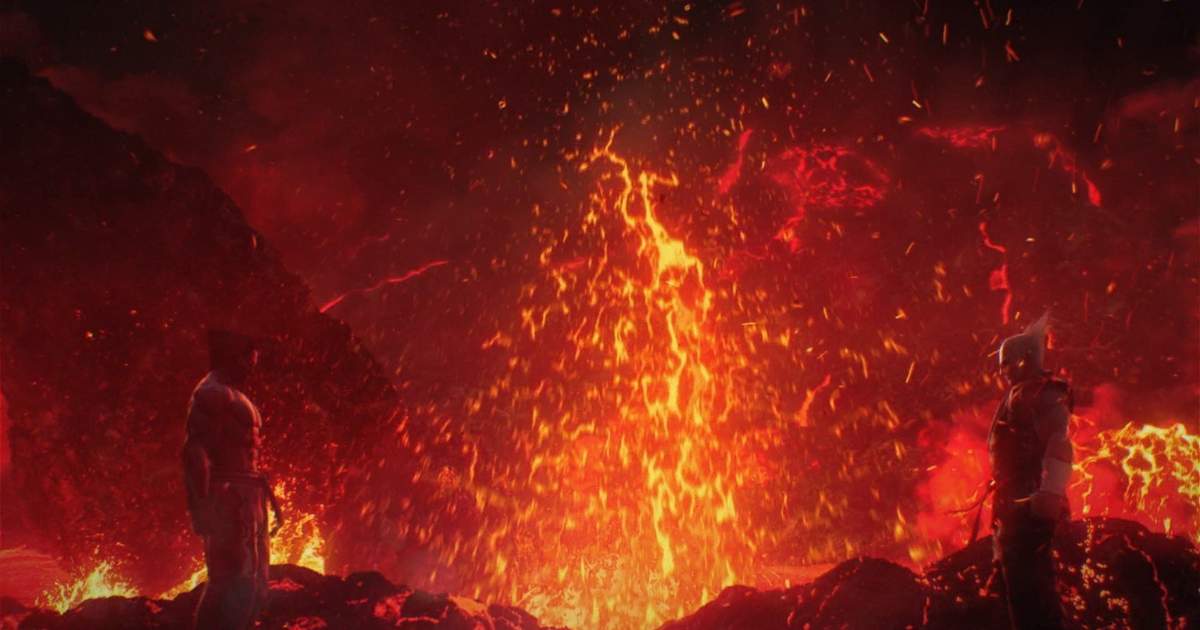
Clash of Generations: Tekken 7 Explained
Q1: Why did Heihachi throw Kazuya off the cliff?
A: Heihachi had imagined the Devil Gene awakening in Kazuya and was afraid of the strength of his son. To prove his survival, strength, and dominance in the bloodline, he threw Kazuya into the emptiness. It was a sadistic obsession that shaped the man/devil Kazuya was to become.
Q2: How did the next generation of the Mishima saga begin?
A: The story began when Jun Kazama encountered Kazuya on his dark path, after surviving Heihachi’s betrayal. She saw the flicker of humanity beneath the Devil Gene, forming a bond that would eventually lead to their marriage and the birth of Jin. Compassion met darkness, shaping the next generation and the legacy that would define the Mishima bloodline.
Q3: Why is Jin so conflicted in Tekken 7?
A: Jin enters Tekken 7 scarred and conflicted after his battle with Azazel in Tekken 6. He struggles to control the power of the Devil Gene within him while striving to end the Mishima bloodline’s cycle of hatred, carrying both physical wounds and the heavy burden of his family’s cursed legacy.
Q4: What was Akuma’s mission in Tekken 7?
A: Akuma was called by Kazumi Mishima to kill Heihachi and Kazuya to avoid further destruction. With honor and the understanding of a real danger, Akuma turned out to be an impartial power testing the forces and determination of the Mishimas.
Q5: Why are Lars, Lee, and Alisa important in Tekken 7?
A: They are not tied to the Mishima curse, yet they determine the fate of the saga. Lars is against tyranny, Lee plays the game, and Alisa is on the border between a machine and a human being. All these offer equilibrium, strategy, and viewpoint to the darkness of the bloodline.
Q6: What happens in the final battle between Heihachi and Kazuya?
A: It is the ultimate trial of the Mishima family, years of dishonesty, greed, and the Devil Gene head-on in a fight that shapes their history. It is a battle where brute force, survival, and family history count for everything… and the result is left to be seen by the players.
Fists, Fate, and Family
The Mishima saga is more than a clash of fists; it is a storm of ambition, hatred, and blood that has shaped generations. Heihachi’s obsession, Kazuya’s darkness, and Jin’s struggle with the Devil Gene are not just battles of strength; they are battles of destiny, of morality, and of survival. Every punch echoes with decades of betrayal, every strike carries the weight of a cursed legacy, and every clash leaves scars that no victory can erase.
Outside the Mishima bloodline, warriors like Lars, Lee, and Alisa, and even the enigmatic Akuma, leave their marks on the battlefield. They remind the world and the Mishimas themselves that strength alone cannot determine the course of fate. Choices, loyalty, and courage shape outcomes, proving that even amid chaos and destruction, hope can linger.
Tekken 7’s saga is a testament to the human spirit and the burdens of legacy. It shows that survival is never guaranteed, that power can corrupt, and that family ties can be both a source of strength and a chain of torment. The story of the Mishimas is one of fire and fury, of love and vengeance, and of the relentless march of fate, where only those who confront their darkness and fight for their own destiny can leave a mark on history.
“Fighting is about who’s left standing. Nothing else.”