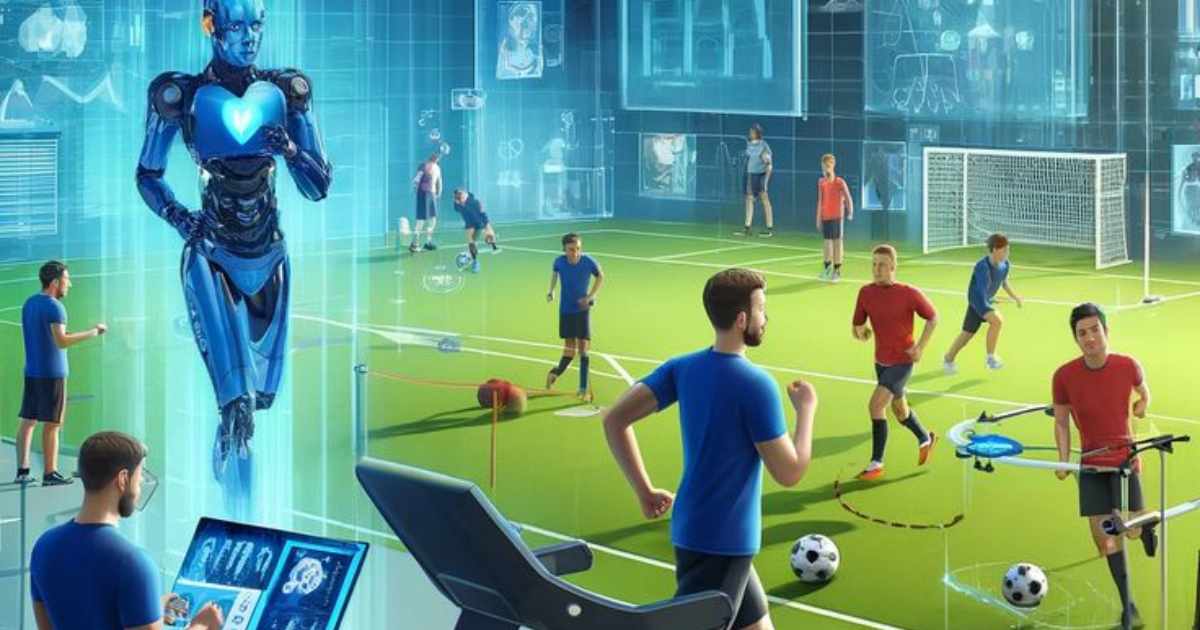
AI Fitness Coaching is transforming how we train, combining technology and discipline into personalized workouts that adapt in real time.
The room is dark, and the screen is lit softly in the stillness of the early morning. It is interrupted by a voice, cold and calculating and human and yet not.
“Welcome back, Maseel. Are you willing to resume your AI-assisted workout plan?”
There’s no trainer in sight, no clipboard, no crowd. It is only you, a moving body, controlled by artificial intelligence that knows how to move, take a break, and relax.
Rep counting is not done by a stopwatch, but it is done by sensors that examine your rhythm and effort. The rhythm of the heartbeat appears on the screen: slow, and then fast.
The exercise robot is customized: “Slow down by five percent. Maintain breathing control.” You obey, not because a machine directs you to do so, but because it knows when to tell you to do so.
This isn’t the distant future; this is the current of intelligent workout technology. Artificial intelligence is not eliminating human motivation; it is redefining it. It is your own personal trainer, nutritionist, and recovery analyst, all built into a system that gets to know every single move you make.
It already has AI fitness apps that customize your progress, smart gyms that can forecast fatigue, and more. Here is where information and will collide, where computing enhances your discipline, and customization becomes the new norm for every athlete and everyday mover. Since AI can compute your limits, it is you who breaks them
The new frontier of fitness begins here. Welcome to AI-Powered Coaching; intelligent coaching, designed for you.
Learn more about how AI is transforming fitness in this detailed guide by Explore AI Tools.
And if you want to know why motivation fades, but discipline lasts, you can check our other blog here.
Why AI Fitness Coaching Is the Future of Training
Imagine this, the gym will not require walls, your trainer does not have to have a body. And you do not go forward by chance.
It is now the most reliable fitness coach the world has ever seen, 24/7, tracking your movement, anticipating fatigue, and tailoring every workout scientifically with admirable precision.
The old-fashioned personal trainer is able to observe your posture, yet AI is able to observe your habits. It examines your reps and rest, and even your micro-pauses that indicate fatigue or power imbalance. It does not merely tell you how to act; it gets to know how you move.
The convenience is not only what makes AI revolutionary, but also hyper-personalization on a scale. Each push, squat, and sprint is turned into data, and each bit of data is turned into direction. The further you go, the more it changes with you.
By 2025, applications such as Whoop Coach, Apple Fitness+, and Fitbod AI will become the world’s trainers of the new generation, able to create a workout depending on the mood, state of recovery, and even the weather.
AI is not a substitute for discipline, but an improvement. It doesn’t judge, it adapts. And together with your momentum, it will be something that can not be stopped, a union between human strength and computer accuracy.
Since fitness is no longer about perfection, it is a matter of personal development.
Learn more about how AI-powered personal trainers are redefining workouts in this guide by FineGym.
How AI Personalizes Your Workouts
The gym was an educated guessing game. You would take a stroll in, select a plan, do as somebody told you, it worked for them, and that it would work for you, as well. But hope is not the way anymore.
Fitness has returned to the individual with the use of AI. Fitbit’s AI-powered trainers don’t hand you a routine; they build one around you. It follows your sleep, rest, food, heart rate, and mood information, and then converts it into a program that is personally tailored to you. Every move of the rep, every beat of the heart, every drop of sweat is feedback.
The algorithm gets to know whether you are a flourishing strength-trainee or an HIIT-trainee. It will know when your energy levels go down in the middle of the week, or when you are overtraining after two highly stressful days. And it evolves overnight; no ego, no burnout, it evolves.
The personalized training is being redefined by Apps such as the Freeletics AI Coach, Fitbod, and Ultrahuman. They come up with tailored programs depending on what you want to achieve, your previous performances, and even your mood on that day. It is the Netflix of workouts, except it is smarter, as it does not merely suggest, it knows.
And here is the best part about it: personalization does not involve efficiency alone. It is all about emotional affiliation. Once your exercise feels personalized, you will no longer struggle to work out, but rather you will make it your second nature.
AI coaching is the type of coaching that listens to your body even when you may not be noticing. It is aware of when to push and when to stop. It understands what your five more reps with strength are, and what five more reps with fatigue are in the guise of pride. This type of personalization will no longer be a luxury in 2025, but it will be the base of modern training. Since your workout is in your language, progress is unavoidable.
AI Recovery, The Silent Coach That Knows When to Rest You
The lights fade, the heart dies, the perspiration evaporates. All sportsmen are familiar with this stage of life, the post-performance silence. But afterwards, it all depends on what comes next. During the old days, recovery was a form of guesswork. You would sleep when you felt weary, stretch when you felt aching, and hope you would come out on your feet.
However, AI is not based on hope; it scans your body like a code. The modern AI recovery systems are not just trackers, though Oura Ring and Whoop Coach, as well as the Body Battery by Garmin, are no exception. They can be called silent trainers who can study your sleep patterns, patterns of heart rate changes, and oxygen levels to decide when it is best to return to training.
Wake up, and your AI coach tells you:
“Your recovery score is 78%. You’re cleared for a medium-intensity session. Today, let the noise fade, narrow your focus to Breathwork. No guess. No guilt. Only fair judgment, powered by the evidence of your own stats.”
AI not only learn how much you can, but when you should not. It finds fatigue prior to its onset, it avoids overtraining, and it also makes you get stronger without getting tired.
And here is the most neglected truth of all: recovery is no laziness, it’s a strategy.
Intelligence gives you purpose when your recovery fuels you. Your rest becomes training. Your stillness becomes power. That’s what the development of FitPlay by Maseel is all about: knowing when to be tough and when to let your data breathe. It’s the reason why the sportsmen of tomorrow won’t just move smarter, they’ll heal smarter.
If you want to know why recovery is more important than hustle to build a stronger, healthier body, you can check our other work here.
Smart Wearables, The Real-Time Feedback Revolution
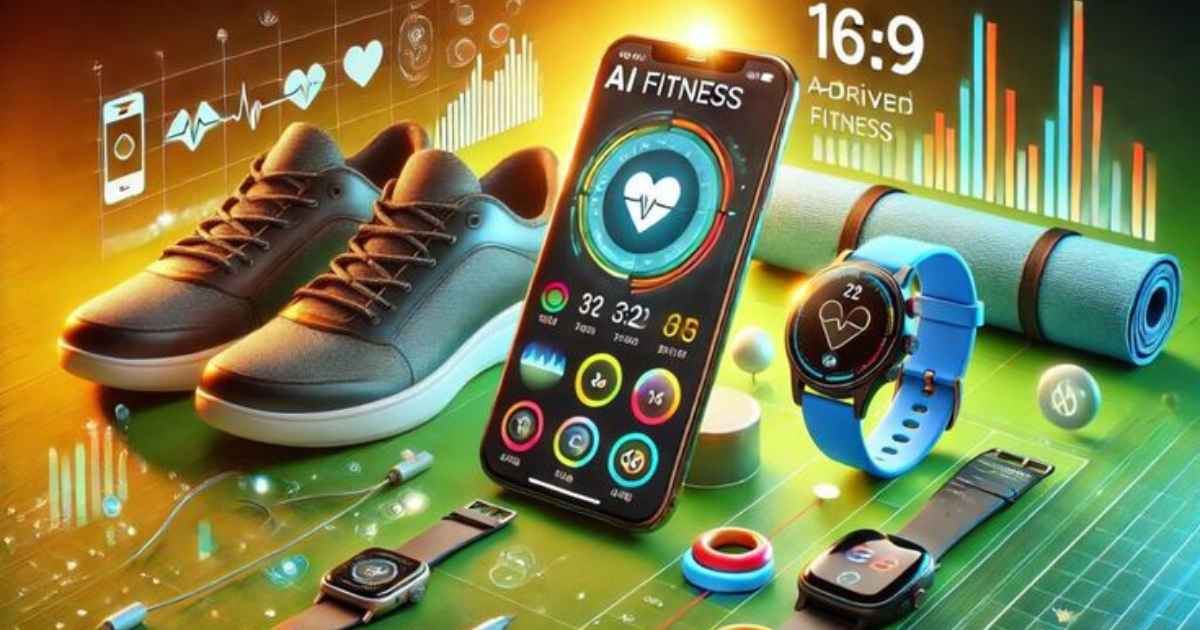
At the wrist, there is a slight trembling. A soft glow from your ring. Your earbuds are telling you you are nearly there. It is not the future anymore; it is your immediate coach who is quietly influencing every action. The future of AI-driven fitness is smart wearables. No more steps/calories are necessary to establish an intelligent conversation between your body and your routine.
Each movement becomes data. Every beat of the heart turns educational. And all of the cues, the sweat, make-up, to the muscle exhaustion, are inputted into a program that understands you better than you did the day before.
Apple Watch Ultra 2, Oura Ring Gen 4, and Garmin Epix Pro wearables that will be available in 2025 do more than show statistics; They interpret them.
Your wrist watch can now be able to identify the early signs of dehydration. Your ring is able to estimate the recovery requirements with accuracy. They all can be synced by your AI app that provides you with a real-time website of feedback that keeps your progress alive second by second.
This is a real-time revolution; this is the world where feedback does not take time, and it is provided. The wearable modifies your intensity when it detects that your heart rate has gone too fast. On seeing steady progress, the challenge increases. You no longer have to wonder whether you have worked hard enough; your technology informs you immediately.
And at such a time, information is conversation. You’re not training alone; you are training on a technology that hears you out and answers you. That is no dependence, that is evolution.
Since each beep, each buzz, each notification represents a single crystal-clear message:
“You are improving, in real time.”
AI in Nutrition, Smarter Eating, Sharper Training
The kitchen lights are dimly glowing. You are sitting at the counter, where you have had a good session. Your smartwatch buzzes.
“You have low levels of recovery protein. Add 25 grams to dinner.”
You smile. No notebook. No calorie chart. Just instant clarity. This is the future of AI-based nutrition, where it does not mean being restricted; it means being precise.
When Data Becomes a Meal Plan
Nutrition in the past decades was based on trial and error. We made guesses of macros, followed fads, or borrowed a diet plan from someone and hoped that it would work.
However, AI nutrition coaching has made food your body language in 2025. Your clothes can now communicate with your food application. Your sleep data is related to the amount of calories you are consuming. And your artificial diet coach, such as Fitia, Ultrahuman, or MyFitnessPal AI, develops a menu that evolves with you.
It’s not a fixed diet, it’s an evolving conversation. When you’re stressed, it reduces your caffeine intake. A well-recovered body treats carbs as fuel, not fatigue.
It reads your measures, foreshadows what you have to have, whispers:
“You’re 10 milligrams short on magnesium; add a banana.”
This is how modern athletes feed, not with fear, but with focus.
Why AI Nutrition Matters
The fitness industry has lost something with the rise of AI, personal context. Your diet is now adjusted not only to what you aim to achieve, but to how you live your day. It learns your cravings, patterns, and rate of recovery, then builds meals that make you, not break you.
And it’s not about perfection. It is all about syncing in, your effort, your fuel, your rhythm, sync.
From Karachi to London to LA, AI nutrition apps now speak the language of local food, culture, and rhythm.
Global reach. Personal taste. Because progress isn’t just coded in data, it’s seasoned with culture, emotion, and the rhythm of how you live. That’s the balance FitPlay by Maseel stands for: where intelligence learns you, not just your numbers.
FitPlay Moves You Can Try Now
Connect everything: Connection of your wearable and nutrition application. Let them communicate.
Load your fuel: It is suggested to change your macros in accordance with the recovery prediction of your AI before each training session.
Conduct a 7-day experiment: Have AI control your diet; monitor the change in energy levels and recovery scores.
Ask your artificial intelligence coach: What is one thing I should add today? Minor alterations result in steady improvements.
Note: Nutrition is not a limitation; it is your plan. Provide nourishment to the future self.
Some wise eating will make each bite count. Each meal is transformed into inertia. That is how FitPlay is, training and technology, intent to mix.
The Human Touch: Why Motivation Still Matters in the Age of AI
The smart world has never existed. Our watches dictate our time to sleep. Our apps track every breath. We are changing our workouts more rapidly than ever. But there are days on which the whole data in the world cannot get you to move.
And there the human flame comes in. AI can calculate your limits. It can predict your fatigue. But it can’t feel your why. It does not feel the hurry of the last rep, or the contentment with your image in the mirror after months of perseverance. It is motivation that helps fill the gap between knowing and doing it anyway.
AI is not a replacement instead of being a partner. It works with the science that your spirit may work with the story.
Feminist Fit captures the moments when strength stops being a number and starts becoming a story.
The decision must exist even within the most sophisticated algorithm. Because no code can feel the discipline it takes to rise at 6 a.m., hear the silence of a one-on-one session, or savor the quiet victory of becoming more than you once were. That’s what you bring, the human pulse that powers this evolution.
AI can improve training, but only incentive inspires excellence. And that’s why FitPlay by Maseel exists: to keep that fire alive, wherever you run, however you run.
When intelligence and inspiration move together, no foe can halt the progress
FitPlay Moves You Can Try Now
- Seek the advice of your AI coach, but respond with your attitude. Have a real target and not a metric.
- Use emotion as data. Measure the experience of workouts, not their rating.
- Remember the mirror moment. Your personal development cannot be simulated by an algorithm.
- Share your wins. Put them up, say them, and motivation will be created when said.
- Conclude each session with thanksgiving. You practiced, you studied, you perfected. That is an improvement, not excellence.
AI powers your body, inspires your future. That’s the unbreakable connection, the living pulse of FitPlay by Maseel.
FitPlay Unfiltered: Real AI Questions. Honest Answers
The screen fades in. The sound of breathing, a heartbeat syncing with a soft digital pulse. It’s not just sweat anymore; it’s data, rhythm, and intelligence learning you.
Here are the real questions people are asking about AI in fitness, answered the FitPlay way.
Q1: Will AI become the future of fitness coaching?
A: Not only the future, but it’s the new evolution. AI does not mean the removal of coaches; it means an improvement.
Imagine it as your non-physical workout partner, it will keep you on course, adjust the intensity, and figure out what is possible in the shortest amount of time possible than any spreadsheet could.
But the passion, the feeling, the fire to stir? That still comes from you.
FitPlay Tip: Plan with AI, not to feel. You are the headbanger; it is reason.
Q2: How is the way AI really know my body?
A: Not by guesses. The data about you, which is collected in a wearable (heart rate, sleep, movement), is an input to the algorithm. AI gets to know how your body responds to stress, rest, and intensity, and then recreates your workouts according to the actual energy curve.
It is as though you have a coach who examines you at the end of each session.
FitPlay Tip: Be sure to match your tracker or Smartwatch with an artificial intelligence fitness app. Allow it to learn you in two weeks, then observe the revelation develop.
Q3: Does AI training personalize the workouts less?
A: Quite the contrary, it causes them to be over-personal. Two individuals were able to receive the same plan in the old model of the gym. Under AI, two individuals never receive the same. All meals, movement, and rest periods are adjusted to your life in the real world, daily weather, sleep, and even stress.
FitPlay Tip: Let AI do personalization and play to win. Partnering, not substituting.
Q4: Could AIs be used to be more motivational or less numerical?
A: The numbers are the beginning, but the momentum is increasing. The better it becomes acquainted with your rhythm, the better it understands your motivational lingo.
Some remind you when you tend to miss them, and some congratulate you on the smallest of achievements that you probably would have ignored. Motivation is no longer based on guesswork, yet it is human.
FitPlay Tip: Have micro goals within your AI app (i.e., 10K steps or hydration streaks). Any minor achievement conditions you and your algorithm.
Q5: Will AI fitness eventually be able to substitute human intuition?
A: Never, and therein lies its loveliness. AI is able to anticipate fatigue and not passion. It may indicate repose, but not design. It knows when to stop, but why should you? I know.
That is the difference between being medically trained and being transported by significance.
FitPlay Tip: Learn yourself, so as not to be lost. The aim is not to live like a robot but to be smart in fitness.
Q6: What happens to AI and fitness in 2025 and further on?
A: Wait, imagine a smooth connection between your body, your surroundings, and the flow of information. The AI won’t just count your reps; it will read your recovery signals, adjust your nutrition in real time, and even optimize your effort by controlling lighting and temperature.
Gym, your smart watch, and your sleep cycle, all these will become a single smart feedback loop.
FitPlay Tip: Start early. The sooner your AI coach gets to know your habits, the smarter it will be when fitness gets completely adaptive.
The lights fade. The heartbeat slows. The machines are not competing with you; you are evolving with machines.
It is the FitPlay truth: AI may examine your body, yet it is up to you to make a step forward.
Conclusion: The Human Pulse Behind the Machine
The gym lights dim. One screen is burning, it is following, foreseeing. The beat of technology sings, although here in between the information, a heartbeat punctuates. That heartbeat is yours.
AI may work out the progress, anticipate the healing, and talk about the next thing, but you are the one who decides to turn up.
FitPlay is in that place where there is a balance between accuracy and passion, where each rep is not a figure. It is not intelligence that is more brilliant than effort in this new world of AI-driven fitness, but it is its magnifier.
You train the machine each time you move, which is the purpose. And in its turn, it helps to make you stronger, smarter, and deeper in your course.
Train with the algorithm, but live to your rhythm. Since the code can be aware of your pulse, but you can only determine your power.
“AI learns your rhythm, but you write the beat.”