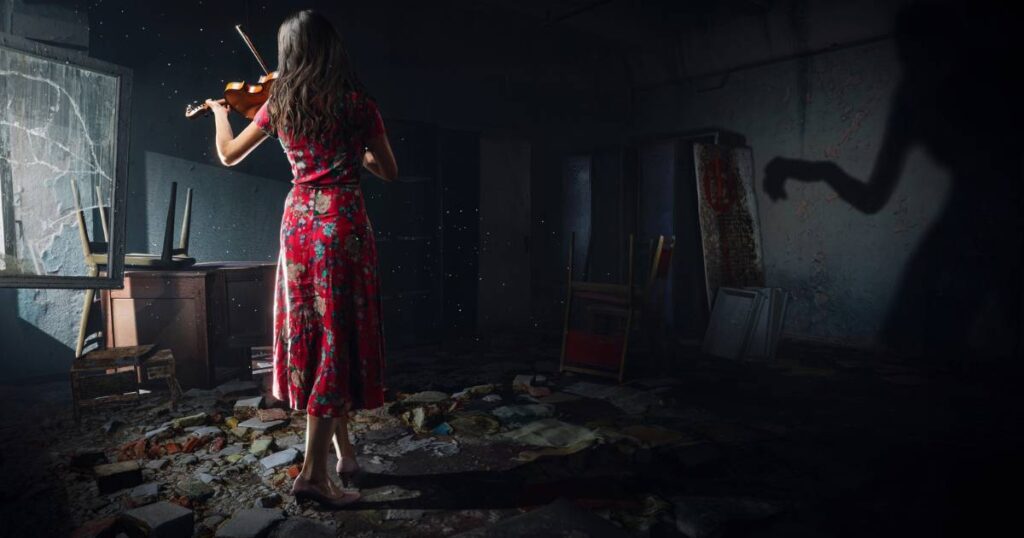
Days Gone still matters, not because of its zombies, but because of the silence, the loneliness, and the humanity it leaves behind.
The road stretches ahead, endless and empty.
Wind cuts across your face. Your hands grip the handlebars, tight enough to feel every vibration. The engine hums beneath you, steady. Constant. Familiar.
This is not a world that waits for heroes.
Days Gone isn’t about hordes. It isn’t about monsters or weapons or flashy fights. It’s about survival when everything else has fallen apart. It’s about the quiet moments, a town abandoned, a forest whispering, a sky bruised with the light of a dying day.
You follow Deacon through miles of silence. Each step, each turn, each lonely mile tells a story. Loss is everywhere. So is grief. And yet, there’s life in the small moments, a rescued dog, a fleeting conversation, the comfort of a bike’s hum against the asphalt.
The game doesn’t rush you. It doesn’t yell or demand attention. It waits. It lets the world breathe. It lets you feel its weight. Every shadow, every creaking building, every wind-swept highway reminds you that survival isn’t about killing zombies; it’s about moving forward when the world doesn’t make sense.
Years have passed since it was first released. Some moved on. Some forgot. But those who stayed, who rode every mile, who felt the emptiness and the fragile beauty, know the truth: Days Gone endures. Not because of the monsters it hides. But because of the humanity it shows in the wreckage, Human. Fragile. Unbroken.
Loneliness as a Mechanic: Why Days Gone Still Matters
The world is quiet. Too quiet.
You are going through woods where leaves rustle, and birds are afraid to call. The highways are empty, the asphalt broken, the remnants of lives which disappeared scattered. Towns are frozen, doors hanging from broken hinges, windows staring back like the eyes of the dead.
And you are alone.
Not just physically. Emotionally. Mentally. Every encounter reminds you how small you are in this broken world, every skirmish, every minor mission. Deacon has no armies. No reinforcements. Every step is a choice. Every ride tests his stamina.
Loneliness isn’t a backdrop. It’s the game. It’s the tension. It dictates your movement, your survival, even your breathing. Quiet feels like the thinnest string, and every sound, the whine of the bike, the snap of a branch, the distant howl of a freaker, pulls it tight until it’s ready to break.
It teaches patience. It teaches caution. It teaches how to see the things that you would have missed. The wind rolling through a town, the uneven stretch of shadows at sunset, the silence of an old, forgotten house.
Days Gone does not tire you out with a frantic nature. It allows the nothingness to fall into your bones. It reminds you that survival doesn’t have to be loud. That fear isn’t screaming. Loneliness itself is its own company, and at times more cumbersome than a horde.
And still there is clarity in that loneliness. You understand the stakes. You feel the world. And when danger finally arrives, it hits harder, because the quiet has already prepared you.
Ride the Silence: Let the quiet teach you. Every empty road, every still moment, sharpens more than any fight ever could.

The Bike as Identity: Freedom, Responsibility, and Survival
The bike isn’t just a tool. It isn’t just transportation.
It is freedom. It is a connection. It is life.
The heartbeat of the engine is felt with each mile you ride. Each decision that you take is more difficult; speed, path, timing, etc., because it is not only a vehicle. It is you. The bike carries more than Deacon through storms, deserted cities, broken highways, and roads swallowed by overgrowth. It carries purpose, responsibility, and a fragile kind of hope.
Without it, the world would swallow you whole. With it, the lonely roads feel less oppressive, the isolation less absolute. The hum beneath your hands becomes a companion, a steady beat that reminds you that even alone, you’re still moving forward.
Hordes can come. Freakers can attack. Supplies can dwindle. The bike, however, teaches patience, judgment and foresight. Each ride is a gamble of risk and safety, or speed and maneuver. The embodiment of survival as a motion.
And more than survival, it becomes identity. Who you are, how you ride, what you value, it all shows in the way you move through the road.
Keep Your Hands on the Bars: The road is yours. Respect it. The bike is more than metal; it’s a measure of how you move through the world.

Hordes as Fear, Not Spectacle
They come without warning.
A distant roar. A shadow in the trees. Then hundreds of figures, taking steps. Their weight shakes the ground. The air tastes of panic.
The fear is not in numbers, however. It isn’t in their size or speed. It’s in how powerless you feel. There is suddenly a small choice. The value of every beat of the heart, each choice might be a matter of life and death.
Hordes are not displays, but classes. They teach you to pause. To plan. To see the world and then to act. Every escape route matters. Any diversion, any disturbance, any fault can bring the balance down.
The disorder is horrifying since it does not last all the time. It comes without warning and disappears. You find yourself lonely once again, but different. Post-storm emptiness is more oppressive, acute. You soon realize that it does not take survival to fight against everything. It is all about knowing when to struggle, when to run and when to just take whatever comes.
Days Gone does not glorify hordes. It respects them. They are the embodiment of fear, the message that it does not always mean that danger is loud to be deadly.
Respect the Swarm: Fear isn’t in the numbers. It’s in how carefully you move through the world they dominate.

Deacon as a Broken Human, Not a Hero
Deacon doesn’t wear a cape.
He doesn’t fight for glory. He fights because he has to. Because survival demands it. Since the world does not regard heroes, it regards only those who continue to move forward.
His scars speak volumes about his face. All indecisiveness, all doubts, all silent inspections of a photograph are more articulate than any bullet. He is sorrow embodied, pain embodied. He rides in order not to triumph, but to survive. To save the little that there is.
Deacon is flawed. Rash. Stubborn. Sometimes reckless. But in those faults, he is very much a man. His survival is due to his persistence in going, to his persistence in feeling, since he never gives up until he tries, even in times when it would be easier to give up. To see why players form deep bonds with characters like him, check out our guide on emotional attachment to game characters.
The game doesn’t glorify him. It shows him. And when he is demonstrated, it demonstrates to us: perfection is not survival. It’s about persistence. It is all about having your wounds and looking down at the deserted road.
Carry the Weight: Strength isn’t in being invincible. It’s in moving forward, even when every step hurts.

The Weight of Choice: Consequences in Every Action
Every action has a shadow.
Each action reverberates further than you anticipate. In Days Gone, there is no room in the world to make a mistake. It does not give you a chance to give it another try. Every decision, whether it is whom to assist, what route to take, when to fight or run, has its consequences. Sometimes small. Sometimes crushing.
Supplies are limited. Allies are fragile. Time is fleeting. A single false step, a moment of hesitation, and the consequences ripple outward. A camp turns hostile. A life is lost. A road becomes dangerous to travel.
The game does not inform you of what is right. It doesn’t reward perfection. It is a bare and simple reality: survival is a mess. Painful. Often unfair. And here, bearing with the effects, you have a lesson. You adapt. Awareness sharpens. Care deepens. Humanity rises to the surface.
Days Gone hopes you can feel that weight. To know that decisions are not machines, they are mirror-images of living. It is that every action, however minor, counts.
Every Step Matters: Your choices shape the road ahead. Move with intention.

Nature and Environment: A World That Breathes
The world does not merely act as a setting.
It moves. It shifts. It waits. Forests are blown along by the wind that tells of the past. Rivers are flowing for the brunt of the time. Silently waiting mountains. Everything has something to say to you, should you listen.
Days Gone is a game in which the environment is alive. It is not there so that you can pass through it. It is responsive, confrontational and educational. Climate alters your plan. Darkness hides danger. There is temporary solace in sunlight. The landscape defines all actions, all choices, all meetings. For more worlds where survival shapes every choice, check out our guide to post-apocalyptic games that redefine survival.
The cold stiffens your body. The emptiness of a clearing. The silent tension of a place that feels safe until it doesn’t. In moments like these, the world itself becomes a character, indifferent, beautiful, unforgiving.
It makes you remember that it is not only monsters that can survive. It is all about reading the world, knowing it, going with it and not against it.
Listen to the World: The environment is alive. Watch it. Learn from it. Move with it.

Storytelling in Small Moments: Life Between the Chaos
Not every story shouts.
Some whispers. Others hide in the crevices of shattered structures, in the hum of a dying engine, in the way Deacon lingers over a photograph. Days Gone narrates its most heartfelt stories not through dialogue, not even through cutscenes, but through the little, silent moments between the action.
An interview with a survivor. A note left behind. Sunlight resting on an abandoned street. These small moments carry loss, hope, regret, and resilience. They make you remember that there are lives that matter in the world, and there are ways in which some of the echoes will never leave.
The game trusts you to notice. To connect the dots. To touch the humanity lurking in the ruins. And when some great thing hits you, it hurts more since you have already been in its world, breathing its weight, knowing its stakes.
Days Gone is not a survival and action game. It is narrated by experience, through presence. By listening in the times when the world is silent, and nothing compels your eyes.
Notice the Quiet: The smallest moments hold the deepest truths. Don’t overlook them.

Days Gone 2: The Story That Needs to Be Told
Some roads never end.
Certain stories make impressions that cannot be forgotten. Days Gone was not simply about surviving the hordes or the empty highways but about lives, loss and the hope that fades but makes people go on. And when the credits came on, the world was incomplete. It did not seem to Deacon that his journey was over.
Unanswered questions remain. Untraveled highways still beckon. Threads of sorrow, love, and survival wait to be carried forward. We’ve lived the silence. We’ve felt the weight. What comes next is no longer our story to finish; it belongs to the people who created it. To Bend Studio. To Sony.
Days Gone 2 isn’t a suggestion. It’s overdue. It deserves the world, the characters, the roads and the people we have become fond of. The fans are no longer pleading. They are reminding the developers that endings are important. It requires continuing some journeys. For an official look at the world and survival experience of Days Gone, see the PlayStation page for Days Gone Remastered.
The ending of the first game is not empty. It’s a signal. It’s a call. And it’s still unanswered.
Ride for the Future: The journey isn’t over. It deserves a sequel. The road is waiting, and so are we.

Questions Left on the Road
Q1: Why does Days Gone feel different from other zombie games?
A: It isn’t about the monsters. It’s about the world between them. The quiet roads, the abandoned towns, the choices you make in solitude. Most games scream for attention. Days Gone whispers. And it’s in that whisper that it teaches patience, loss, and survival.
Q2: Is Deacon a hero?
A: Not in the traditional sense. He is human, broken, stubborn, grieving, and surviving. His strength isn’t in weapons or skill. It’s in endurance, in moving forward when everything around him wants to stop. Watching him is watching someone carry the weight of the world without asking for applause.
Q3: Are the hordes just for spectacle?
A: No. Hordes are lessons. Fear distilled. They force you to pause, to observe, to respect the world. They aren’t about flashy action. They are about consequences, tension, and survival. They make you feel small, and in feeling small, every choice grows heavier.
Q4: Why does the environment feel alive?
A: Because it is. Forests, rivers, abandoned towns, changing weather, they all move, react, and teach you. Every detail matters. Survival isn’t just about monsters; it’s about reading the world, understanding it, and moving with it.
Q5: Why do fans still want Days Gone 2?
A: Because the story isn’t over. The roads left untraveled, the threads untied, the lives unfinished, they haunt us. Deacon’s journey deserves continuation. The silence at the end of the first game isn’t empty; it’s a call that hasn’t been answered yet.
The Road Ahead
The road doesn’t end.
It stretches beyond the ruins, beyond the silence, beyond what we’ve seen. Days Gone taught us that survival isn’t measured in battles fought or monsters killed. It’s measured in moving forward when the world feels empty, when the nights are long, and every mile carries the weight of everything lost.
Deacon rides because the journey matters. Every choice, every quiet moment, every shadow and empty street shapes not just his story, but ours as we follow. We feel the loneliness, the fear, the fragility, and we carry it with us long after the screen fades to black.
The first game left questions. Roads untraveled, stories unfinished. And the silence at the end is not absence. It is a call, a reminder that some journeys deserve continuation. That some stories, like Days Gone 2, are not optional. They are necessary.
We ride forward, carrying the lessons, the losses, the small moments that mattered most. The road continues, and so does the hope.
“Some roads don’t have endings. They only have riders who refuse to stop.”