Are fitness trackers good or bad for your mental health? It’s a question more people are starting to ask as numbers begin to shape how we feel.
It’s late.
The day is finally quiet.
No noise. No conversations. No expectations left to meet.
Just you… and a soft glow from your screen.
You didn’t open it for anything important.
Just a habit. Just a quick look.
Your steps.
Your calories.
Your progress.
For a second, it feels normal.
Routine.
But then your eyes pause.
Not enough steps.
Not enough movement.
Not enough… done.
And somehow, in a day when you already gave your energy to everything else,
This small number manages to feel heavier than it should.
So you stand up.
Not because you want to.
Not because your body is asking for it.
But because something inside you whispers,
You’re behind.
You start walking.
Around your room.
Through quiet spaces.
Chasing a number that no one else can see… but you can feel.
And in that moment, something shifts.
What once felt like motivation…
Now feels like pressure.
What once helped you stay on track…
now quietly decides what “enough” looks like.
And the question doesn’t come loudly.
It doesn’t interrupt you.
It just lingers… in the background of your thoughts,
Are you really taking care of yourself…
Or are you just trying to keep up with a screen?
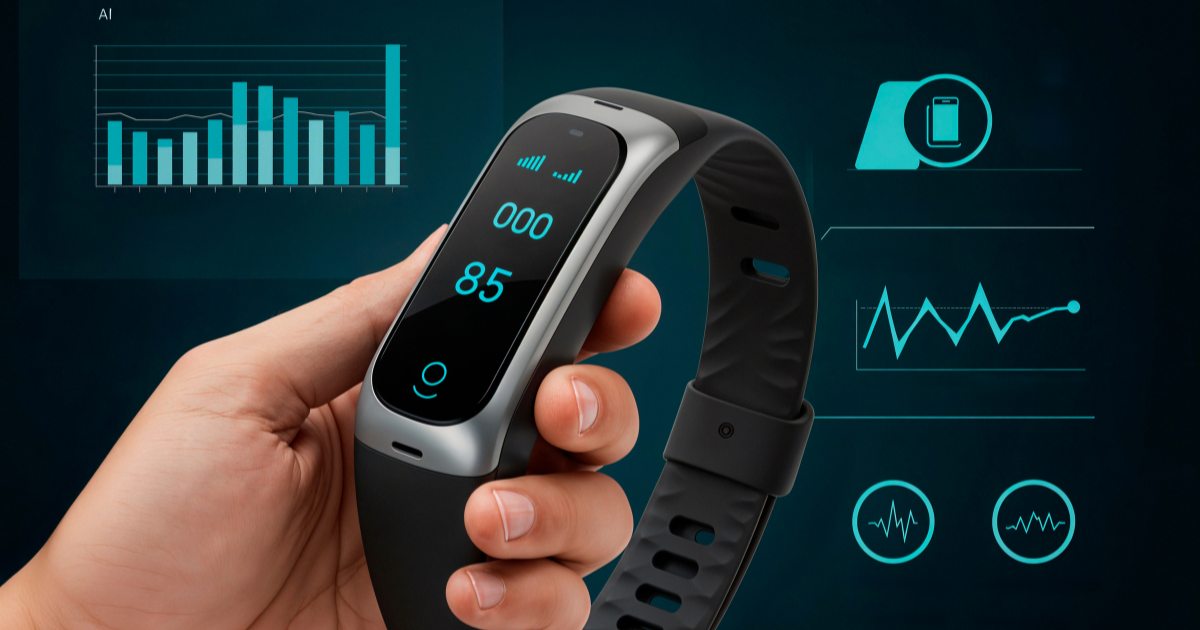
Are Fitness Trackers Good or Bad for Your Mental Health at the Start?
In the initial stages, it is easy.
You do not think too much about anything.
You’re just… paying attention.
A quick look at your steps.
A glance at your movement.
A little consciousness of what happens in your day.
And somehow, that awareness feels powerful.
And in the first place, your work is no longer conspicuous.
You can see it.
Track it.
Understand it.
And that changes something.
You start moving differently, almost without thinking. You begin to notice choices you didn’t realize mattered:
- Take the stairs instead of the elevator.
- Walking a little more during the day.
- Feeling a sense of accomplishment from small wins.
Not because you have to,
but because now, you notice.
In a place where the majority of days go by in a hurry and unorganized,
The feeling of control is grounding.
There’s no pressure yet.
No guilt.
No stress.
Just you, your body, and a system that whispers rather than shouts.
During this stage, the fitness trackers run as required; they instruct, assist, and motivate, yet they require nothing.
Beyond the Numbers: Awareness is powerful, but it’s only helpful when it serves you. Take a moment to notice how your body feels, not just what the device says. Small wins count, even if the numbers don’t.
When Numbers Start Controlling You
At first, it’s subtle. Almost invisible.
A glance at your wrist. The number of steps is a bit lower than yesterday. A goal you didn’t hit.
It shouldn’t matter. It’s just a number.
But somehow… it does.
The realization, which seemed like liberation, is gradually turning into a burden. You can see yourself move, but not because your body desires to act so, but because the device instructs you to. Even rest feels like failure.
Those little nudges that once guided you now quietly dictate your moves. You start living by the tracker, not your energy. Fatigue doesn’t stop you; you take extra steps, push yourself late at night, and even an hour of rest feels like weakness.
And the shift grows:
- Every step and movement begins to feel like a test.
- Missing a target triggers subtle frustration, guilt, or anxiety.
- Motivation moves from internal desire to the device’s notifications.
- Progress feels meaningless if the numbers don’t align perfectly.
You hardly notice it at first. The stress is silent, and it is creepy, though it becomes heavier as time goes on. You start comparing your statistics with those of others, even without noticing. Small wins feel irrelevant. The pleasure of moving is substituted by calculus and judgment.
The gadget that was supposed to offer the level of awareness has become a silent watchdog, quantifying all the actions. You are no longer moving for yourself; you are moving for a number. And that constant comparison, even with your own past, slowly drains your mental strength.
You are aware that the helpful guide has turned out to be a minor stressor. It murmurs daytime reminders behind your head that affect your decision-making and your physical strength, and, in some cases, you do not even realize that until you get tired or angry, or even nervous.
Beyond the Numbers: Numbers are tools, not rulers. Let your body lead, not the device. Celebrate the effort, not just the stats. Progress exists even when the numbers don’t reflect it perfectly.
Motivation vs Obsession
The difference between acting in your own best interest and acting like the figures is a thin one.
At first, the tracker feels like a friend. It pushes you, shows you the right way, and praises minor success. Each of the achieved goals is a sense of accomplishment that you are becoming better.
But slowly, the line blurs.
You begin to notice the machine more than your flesh. You check it constantly. You think about what you want to do, rather than what you feel like doing. Each step that you missed, each goal that you have not accomplished eats at you in a manner that was never intended by your body.
Motivation is supposed to lift you. Obsession quietly drags you down.
- Motivation inspires you; obsession pressures you.
- Motivation celebrates progress; obsession punishes rest.
- Motivation comes from within; obsession comes from the device.
- Motivation energizes; obsession drains.
And the slight change is strong. Motivation is something natural, a power source. Obsession is cumbersome, and you are always reminded that you are lagging.
You find yourself asking: Should I rest today, or push on despite exhaustion? Should I pause and listen to my body, or chase after the ring anyway?
That is where the tracker ceases being a guide. It becomes a quiet test of worth. You start moving to meet its demands, not your own. And even when you recognize it, stepping back feels impossible. The numbers have already begun to shape your choices, your mood, and your sense of self.
Beyond the Numbers: Check in with why you’re moving today. Are you chasing numbers, or listening to your body? True progress comes from balance, not perfection. Celebrate effort, energy, and awareness, not just the stats.
The Hidden Stress You Don’t Notice
It doesn’t scream.
It does not require your attention.
And it just creeps over, a shadow which trails you all day.
You check your tracker in the morning. A gentle tug, a quiet reminder of yesterday’s goal left unfinished. You look a second time in the afternoon. Another push, another mute saying that you are behind.
Slowly, the whispers pile up.
You start noticing tension you didn’t have before:
- Tight shoulders from walking extra steps without realizing it.
- Restless thoughts when you try to relax.
- A quiet pressure under your skin that makes every step feel like a test.
- Constant comparisons to your past numbers or someone else’s stats.
It is almost unnoticeable, and the tension is not dramatic. But it influences your choices, your vitality, and your spirits. It determines your attitude towards rest, movement, and even meals. It is the type of stress you may not necessarily call by name, but you experience in your chest, your head, and the rhythm of your day-to-day life.
Healthy habits can become a burden due to the veiled weight of keeping up. Even the exercises that should help you relax, such as walking, stretching, or a small workout, may begin to seem like a duty. You move not because you want to, but because the ring, the marker, the number demands it. You love the motion, yet it’s now driven by the measure, not the joy.
And this is when you know: It is when what should guide your health quietly turns into a source of anxiety, a subtle burden you carry without even noticing.
Beyond the Numbers: Stress is natural, but it shouldn’t come from the tools meant to help you. Pay attention to how your body and mind feel. Move when it feels right, rest when it needs rest, and let the numbers guide you, not rule you.

Ignoring Your Body’s Signals
Your body is always talking.
It whispers when it needs rest.
It nudges when it needs action.
It signals when it’s tired, stressed, or tense.
However, when that happens to the tracker, and you listen to it most, all your own signals begin to subside. That subtle fatigue? Ignored. That tight muscle? Overlooked. That mental exhaustion? Pushed aside.
You follow the numbers instead: hitting goals, closing rings, checking boxes. And slowly, your body’s language gets drowned out by the device’s notifications.
- Fatigue is ignored in the pursuit of steps or goals.
- Hunger or hydration cues are overlooked because “the tracker doesn’t care”.
- Pain or discomfort is dismissed to hit the target.
- Mental or emotional fatigue was pushed aside to chase numbers.
The irony is painful: in trying to improve your health, you can end up harming it. You move, stretch, and walk, but not because your body needs it. You do it because the screen told you to.
And at some point, your body will start feeling like an instrument, like a scale, a digit on the screen. The faint voice of intuition, the part that tells you when to stop, slow down, or simply rest, is drowned out in the shuffle.
Living against the natural rhythm of your body may cause burnout, frustration, and may also result in injury. You begin to doubt yourself: Am I, in fact, moving on myself, or on account of the figures?
Beyond the Numbers: Your body knows best. Listen to it first. Let the numbers guide you, but never override the signals your body sends. Rest, hydration, and mindful movement are as important as steps and calories.
The Social Pressure of Sharing Your Stats
It begins quietly, almost unnoticed.
You post a picture of your steps on the day. A friend comments. Another likes your activity. There is a slight validation that goes through your head.
And at first, it feels good. An accomplishment, an incident.
Gradually, the pressure creeps in. This mirrors the pattern explored in social media fitness confusion, where constant comparison slowly shifts focus from self-improvement to validation. You find yourself comparing, not just with friends, but with everyone around you. How many steps did they take today? How many workouts did they finish? Are you doing enough to keep up?
The tracker becomes more than a guide; it becomes a measuring stick against others.
- Comparing your stats with friends or online communities.
- Feeling guilt or inadequacy if someone else’s numbers are higher.
- Pressure to post or share achievements even on days you don’t feel like it.
- Measuring your self-worth through someone else’s activity.
It’s subtle. It’s invisible. But it influences choices, spirits, and vitality. You begin to run after figures just to keep pace and not to run about. The joy of moving becomes tangled in comparison, and the freedom you once felt with your tracker starts to slip away.
Beyond the Numbers: Your progress is personal. Sharing can inspire, but never define you. Focus on your journey, not someone else’s stats. Celebrate your effort, and remember that comparison steals joy from the process.
How to Use Trackers Without Losing Yourself
Once again, the tracker can be a guide.
You do not need to struggle with numbers, but just make it work to your advantage and not to your disadvantage. It is a slight yet effective difference: consciousness without fanaticism, mentorship without pushes, inspiration without the feeling of guilt.
It begins with the recollection of the reason why you are in motion. Your body is alive, and that is why you move. You move because strength and energy are your allies. Every step, stretch, and breath is an act of care for yourself, not a performance for a machine.
You set boundaries. Notifications become gentle reminders, not a constant referee. This balanced approach aligns with research from Harvard T.H. Chan School of Public Health, which emphasizes sustainable habits and long-term well-being over perfection in numbers. You take rest seriously. You celebrate effort, not perfection. And slowly, the tracker returns to its purpose: to support you, not judge you.
- Set goals that fit your energy and lifestyle, not arbitrary metrics.
- Schedule rest days and listen to your body’s signals.
- Use notifications sparingly; let them guide, not nag.
- Celebrate effort and consistency, not just completed rings or steps.
The tracker is a companion when put to good use. The tracker becomes a quiet companion, helping you reclaim awareness, balance, and trust in yourself. You regain control over your movement, your body, and your mind.
Beyond the Numbers: Let the device be your guide, not your boss. Track for awareness, not validation. Balance effort with rest, and remember: your journey is measured in energy, growth, and presence, not just numbers on a screen.
Redefining Success Beyond the Device
Success isn’t just steps. It isn’t just rings. It is not a figure on a wrist glaring.
The real success is in the feeling in which you live, the decisions you make, and the vitality which you bring to the day. True success is found in the quiet victories the tracker can’t capture, in the walk that cleared your mind, the pace that challenged you, the rest that renewed your spirit. These are the moments that truly count.
When you stop letting numbers dictate worth, you start noticing what really matters.
This is where the true impact of movement lives, not in numbers, but in how it makes you feel, something deeply explored in how exercise improves mental health. You celebrate effort, consistency, and balance. You listen to your body. You honor your limits. And in that space, movement becomes freedom, not obligation.
- Focus on energy, growth, and consistency rather than perfect stats.
- Celebrate small wins that the device can’t measure.
- Listen to your body, mind, and emotions first.
- Make progress personal, not dictated by a ring or metric.
The tracker is a tool. The actual success is in getting your rhythm back, your awareness of the world back, and your own joy. When you act out of choice, not due to a machine commanding you to, you open the door to a greater level of satisfaction.
Beyond the Numbers: Step back from the metrics. Let your body, mind, and spirit define success. Every intentional movement, every mindful rest, every day you show up for yourself, that’s real progress.
Q/A: Are Fitness Trackers Helping You, or Stressing You Out?
Q1: Are fitness trackers actually good for me?
A: They can be. When used as a guide, they create awareness, motivation, and insight into your habits. But the key is to let them support your journey, not control it. Your body knows more than any device.
Q2: How do I know if I’m becoming obsessed?
A: Listen to your thoughts. Do you feel guilt or stress when a goal isn’t met? Are you moving when your body is tired just to hit a number? Obsession shows up as pressure, not energy. Motivation feels light, rewarding, and internal.
Q3: Can tracking really cause stress?
A: Yes. Subtle mental pressure builds up quietly over days and weeks. Notifications, incomplete goals, and comparisons can feel like an obligation instead of freedom. Awareness is helpful, but obsession is draining.
Q4: How can I use my tracker without losing myself?
A: Set realistic goals. Schedule rest. Check notifications sparingly. Track progress, but always prioritize listening to your body and honoring its signals. Remember, the tracker guides, you decide.
Q5: What should I focus on instead of just numbers?
A: Energy, consistency, balance, and presence. Celebrate small wins that a device can’t measure: a walk that clears your mind, a stretch that relieves tension, or simply showing up for yourself. These are the victories that last.

Conclusion: Moving Beyond the Numbers
The tracker sits quietly on your wrist. A silent companion, a gentle guide. Yet its presence is more than just numbers; it reflects a choice: will you move for yourself, or for the device?
The truth is simple, but often overlooked: your worth isn’t measured in steps, rings, or calories. It’s measured in awareness, effort, and presence.
When the device becomes a tool rather than a judge, movement transforms from obligation into freedom. Every step becomes intentional. Every pause becomes restorative. Every action reconnects you with your body, your mind, and the rhythm of your life.
You start noticing subtle victories: the calm that follows a mindful walk, the energy gained from a proper rest, the quiet pride in showing up for yourself again and again. These are the moments the numbers can’t capture, the moments that define real progress.
In the end, success isn’t blinking on a screen. It’s the freedom to move, the trust to rest, and the courage to listen to yourself.
“True progress isn’t measured by numbers, it’s felt in your body, mind, and the joy of showing up for yourself.”